
Last Updated on September 3, 2026 by Bala Kumar
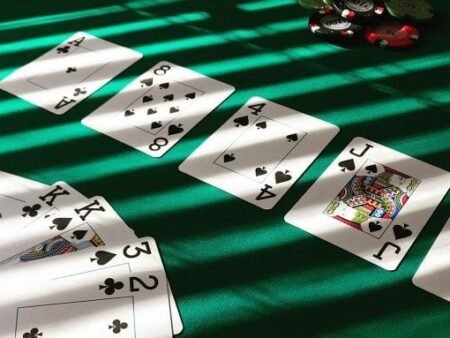
Short deck poker looks like Hold’em. It deals like Hold’em. And it punishes Hold’em instincts harder than almost any variant you can sit down in.
Strip the 2s through 5s out of the deck and you’re left with 36 cards. That single change rewires the equity of nearly every hand you’ll ever hold. Draws that were long shots become coinflips. Premium pairs stop being premium. The board texture you learned to read for a decade now means something different.
This guide covers the math that actually changes and the adjustments that follow from it. All equity figures below were calculated directly for a 36-card deck rather than borrowed from Hold’em charts.
The two rule changes that drive everything
Flushes beat full houses. With nine cards per suit instead of thirteen, flushes get scarce. Out of the 376,992 possible five-card hands in a 36-card deck, there are just 480 plain flushes against 1,728 full houses; boats are roughly 3.6 times more common. Promoting the flush isn’t a gimmick; it’s arithmetic.
The ace plays low with 6-7-8-9. A-6-7-8-9 is the wheel. It’s the single most-missed hand in the game because it doesn’t look like a straight to an eye trained on A-2-3-4-5.
The variant question you must ask before your first hand
Whether three of a kind beats a straight depends on where you’re sitting, and the industry hasn’t settled it.
The mathematical case for trips-over-straight is strong. In a 36-card deck there are 6,120 straights against 16,128 hands containing trips, straights are the rarer hand and arguably deserve the higher rank. That’s why the original short deck games ranked trips above straights.
But most modern venues, including Triton Poker events and the majority of online platforms, have reverted to the familiar straight beats trips order, largely to keep the rules close to Hold’em. Other rooms still run the traditional way.
Ask before the first hand. Getting this wrong once, in a big pot, costs more than every other leak in this article combined.
Full short deck hand rankings
| Rank | Hand | Note |
| 1 | Royal flush | |
| 2 | Straight flush | Only 24 exist in the whole deck |
| 3 | Four of a kind | |
| 4 | Flush | Promoted above the full house |
| 5 | Full house | |
| 6 | Straight | Or below trips — check house rules |
| 7 | Three of a kind | |
| 8 | Two pair | |
| 9 | One pair | |
| 10 | High card |
The number that changes your whole game: draws hit ~50%
This is the heart of short deck poker strategy. After the flop, only 31 cards are unseen instead of 47. Every out you hold is worth dramatically more.
| Draw | Outs | Short deck (2 cards) | Hold’em (2 cards) |
| Flush draw | 9 | 50.3% | 35.0% |
| Open-ended straight draw | 8 | 45.6% | 31.5% |
| Two overcards | 6 | 35.5% | 24.1% |
| Gutshot | 4 | 24.5% | 16.5% |
Read that again. A flush draw on the flop is a coinflip. An open-ender is nearly one. A gutshot in short deck is worth more than an open-ended draw in Hold’em.
Turn-to-river odds shift the same way, because only 30 cards remain unseen:
| Outs | Short deck (river only) | Hold’em (river only) |
| 4 | 13.3% | 8.7% |
| 8 | 26.7% | 17.4% |
| 9 | 30.0% | 19.6% |
Replace the rule of 4 and 2 with the rule of 6 and 3
Your mental shortcut needs updating. In short deck:
- Flop, two cards to come: multiply outs by roughly 6
- Turn, one card to come: multiply outs by roughly 3
Nine outs × 6 = 54% against a true 50.3%, so the flop estimate runs a little hot with big draws, shade it down when you’re counting eight or nine outs. On the turn, 9 × 3 = 27% against a true 30%, so it runs slightly cold. Neither error is large enough to change many decisions, and both beat using Hold’em numbers.
What this does to your play
Drawing hands become semi-bluffing engines. With a flush draw you often have the majority of the equity against a made pair, which means you can build pots aggressively rather than trying to see cheap cards.
The flip side is uglier: your made hands are under constant threat. Top pair on a coordinated board is close to worthless when the villain’s draws are getting there half the time. Set-mining logic breaks too, because sets get outdrawn far more often here than in a full-deck game.
Starting hand equities collapse toward each other
Here’s where Hold’em instincts do the most damage. I ran these matchups over a 36-card deck and put the Hold’em figures beside them.
| Matchup | Short deck | Hold’em | Shift |
| AA vs JTs | 62.7% | 78.1% | −15.4 |
| AA vs 88 | 71.9% | 79.9% | −8.0 |
| KK vs AQs | 57.2% | 67.9% | −10.7 |
| QQ vs AKs | 45.6% | 53.8% | −8.2 |
| QQ vs AKo | 48.1% | 56.8% | −8.7 |
| 88 vs AKo | 44.9% | 55.0% | −10.1 |
| 99 vs JTs | 41.3% | 51.1% | −9.8 |
| AKo vs 76s | 57.1% | 57.6% | −0.5 |
Monte Carlo, 60,000 runouts per matchup, straight-beats-trips ranking.
Three things jump out.
Aces stop being a fortress. Pocket aces against a suited connector like JTs is a 63/37 proposition, not 78/22. You still want the hand, you just can’t play it like it’s a lock, and stacking off 200 big blinds deep with it preflop is far less automatic than the Hold’em version.
Medium pairs are now the underdog against two overcards. In Hold’em, 88 beats AKo 55% of the time and the “race” framing is roughly accurate. In the short deck, 88 vs AKo is 44.9%, you’re not racing, you’re behind. Broadway cards make straights constantly on a compressed deck, and the pair’s only real path is improvement.
QQ can’t call an AK jam and feel good. At 45.6% against AKs, queens are the worst hand.
The practical takeaway: big pairs go down in value, and suited Broadway cards go up. QJs and JTs flop straights, straight draws, two pair and trips at rates that would look absurd to a Hold’em player. Play them.
Sets, pairs, and the frequency shift
Two more numbers reshape post-flop play:
- You’re dealt a pocket pair 8.57% of the time in short deck, versus 5.88% in Hold’em, one hand in twelve rather than one in seventeen.
- A pocket pair flops a set 17.1% of the time, versus 11.8% in Hold’em, roughly one flop in six.
Combined, these mean set-over-set situations show up with real frequency, and a bare set is a much less reliable stack-off than your instincts suggest. When the board is connected or two-suited, a set is a strong hand that is often drawing to a boat rather than holding the nuts.
Note that suited hands come along at about the same rate as in Hold’em, 22.9% versus 23.5%. What changed isn’t how often you’re suited; it’s what being suited is worth. Same frequency, far better payoff.
The betting structure: antes, not blinds
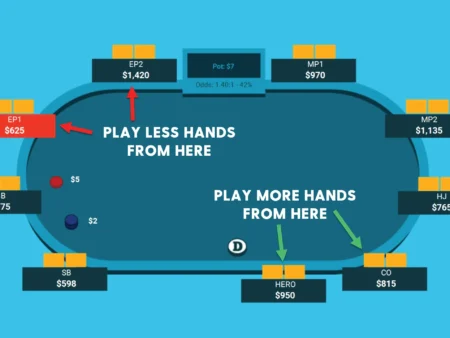
Most short deck games abandon the small blind / big blind structure entirely. Every player antes, and the button posts a double ante (sometimes called the button blind).
That has two consequences worth internalising:
- There’s dead money in every pot from the first card, which makes stealing more profitable and opening ranges wider than Hold’em equivalents.
- Positional dynamics shift. With no blinds to defend in the usual sense, the button’s extra ante buys the same positional advantage but changes who has the incentive to fight for the pot.
Five Hold’em habits to unlearn
- Betting a full house into an obvious flush board. The single most expensive autopilot error in the game.
- Missing the A-6-7-8-9 wheel, both when you have it and when your opponent’s board hits it.
- Folding draws to standard-sized bets. A gutshot has 24.5% equity here. Do the pot odds math fresh instead of reaching for a Hold’em fold.
- Treating a set as the nuts. Sets arrive every sixth flop and get run down often.
- Playing pocket pairs as premiums. They’re smaller favourites against overcards, so the price you can pay to see a flop is lower.
Where the edge actually is
Short deck rewards players who recalculate rather than pattern-match. The field is full of Hold’em regulars running Hold’em heuristics on a deck that no longer supports them, folding draws that are coinflips, over-defending pocket pairs, and paying off flushes with full houses.
You don’t need a new strategic philosophy. You need new numbers, and the discipline to use them when your gut is shouting the old ones.
FAQs
What is short deck poker?
Short deck, also called 6+ Hold’em, is Texas Hold’em played with a 36-card deck. The 2s, 3s, 4s and 5s are removed, leaving 6 through Ace in each suit.
Does a flush beat a full house in a short deck?
Yes, in every version of the game. With only nine cards per suit, flushes are about 3.6 times rarer than full houses in a 36-card deck.
Does three of a kind beat a straight in 6+ Hold’em?
It depends on the venue. Triton Poker and most online rooms rank a straight above trips, matching Hold’em. Some rooms use the traditional short deck order where trips beat a straight. Always confirm before playing.
What is the lowest straight in short deck?
A-6-7-8-9, with the ace playing low. The highest is still 10-J-Q-K-A.
How often does a flush draw hit in short deck?
About 50.3% of the time with two cards to come, compared to 35% in Hold’em.
What are the best starting hands in short deck poker?
Pocket aces remains the strongest hand, but suited Broadway hands like AKs, QJs and JTs gain significant value relative to Hold’em, while medium pocket pairs lose value against two overcards.
Founder of PokerClubGames.com and a Poker Researcher with 10+ years of experience in SEO, WordPress development, and gaming content strategy. Specializes in researching online poker sites, poker apps, tournaments, bonuses, and poker strategies. Experienced in poker platform reviews, affiliate marketing, and creating SEO-focused poker content for global audiences.
For collaborations, media inquiries, or poker-related partnerships:
Contact: Info@hugecount.com