Last Updated on May 12, 2026 by Bala Kumar
Poker in 2026 is no longer the same game it was a decade ago. The rise of solver-based analysis, faster online formats, global player pools, and aggressive tournament structures has completely reshaped how winning players think and act. Whether you are playing casual online poker games, grinding multi-table tournaments (MTTs), or aiming for elite events like the World Series of Poker, success now depends on structured strategy rather than instinct.
To consistently win more hands, you need to master three core pillars of modern poker: bankroll management, positional strategy, and intelligent aggression (bluffing). Around these foundations sit deeper layers like opponent reading, mental discipline, and adaptation to evolving game formats.
This guide explains the most effective poker strategy in 2026 in a practical, structured way that can help beginners and intermediate players improve quickly.
Why Poker Strategy Matters More Than Ever in 2026
Modern poker is significantly tougher than before. Even low-stakes games now include experienced players using software tools and advanced strategies. The game has evolved due to:
- AI-assisted study tools and solver outputs
- Fast-fold formats increasing hand volume
- More aggressive pre-flop and post-flop play
- Global competition in online poker tournaments
- Highly structured tournament environments
Because of these changes, players who rely only on intuition or “feeling” are at a disadvantage. Today’s winning players approach poker like a system—where every decision is calculated.
1. Poker Bankroll Management: The Foundation of Survival
The most overlooked but critical part of poker strategy is bankroll management. Even the best players in the world experience losing streaks due to variance. Without proper bankroll control, even a winning player can go broke.
Why bankroll matters
Bankroll management helps you:
- Survive variance swings
- Avoid emotional decision-making
- Maintain confidence during downswings
- Stay in optimal stake levels
- Protect long-term profitability
Cash Game Strategy
For real money poker games, professionals typically follow:
- 30–50 buy-ins for stable, low-risk play
- 20–25 buy-ins for aggressive, high-skill players
- Strict move-down rules after losses
Example:
If you play $100 buy-in cash games, a safe bankroll range is $3,000–$5,000 depending on risk tolerance.
Tournament Bankroll Strategy (MTTs)
Tournament poker has much higher variance than cash games. Even strong players can go many sessions without a deep run.
Recommended approach:
- 100–300 buy-ins for tournaments
- Extra reserve for re-entries and satellites
- Conservative bankroll for large-field events
Example:
A player entering $50 tournaments should ideally maintain $5,000–$15,000 bankroll.
This discipline is what separates long-term winners from recreational players.
2. Position: The Most Powerful Strategic Advantage
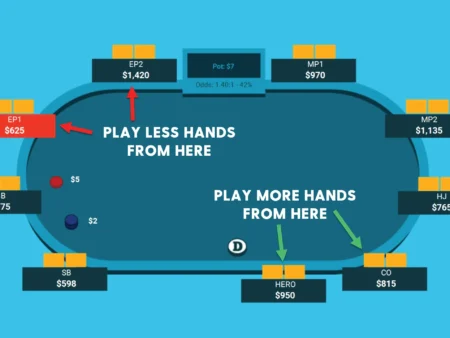
In Texas Hold’em poker, position is one of the strongest strategic tools available. It determines how much information you have before making a decision.
Early Position (EP)
- Limited information
- Must play tight ranges
- Only strong hands are profitable
- Avoid speculative plays
Middle Position (MP)
- Balanced approach required
- Slightly wider hand selection
- Controlled aggression
- Begin applying pressure selectively
Late Position (Cutoff & Button)
- Maximum information advantage
- Best stealing opportunities
- Strong bluffing potential
- Control over pot size
Most professional players generate the majority of their profit from late position. Understanding position alone can significantly increase your win rate in online poker games.
3. Bluffing Strategy: Intelligent Pressure, Not Random Risk
Bluffing is often misunderstood by beginners. In modern poker, bluffing is not about guessing—it is about structured pressure and logic.
A good bluff requires:
- A believable story across betting rounds
- Correct board texture
- Weak opponent tendencies
- Appropriate stack sizes
- Strong table image
Types of Advanced Bluffs
Continuation Bets (C-Bets)
After raising the pre-flop, you continue betting on the flop regardless of hitting the board.
Semi-Bluffs
Bluffing with drawing hands like flush or straight draws, giving you backup equity.
River Bluffs
High-risk plays when opponents show weakness on the final street.
When NOT to Bluff
Avoid bluffing when:
- Opponent is a “calling station”
- Board is heavily connected (dangerous textures)
- Your table image is weak
- Stack sizes are too shallow
Incorrect bluffing is one of the fastest ways beginners lose money in high-stakes poker tournaments.
4. Reading Opponents: The Modern Skill Edge
Modern poker is deeply analytical. Even in online environments, players reveal patterns through behavior.
Key things to observe:
- Bet sizing consistency
- Timing of decisions
- Frequency of aggression
- Pre-flop raising habits
- Showdown tendencies
In live poker, physical tells like breathing changes or posture shifts also become useful.
Top players constantly adjust strategy based on opponent behavior rather than sticking to fixed rules.
5. Adapting to Online Poker Evolution
Online poker is now faster and more competitive than ever. Platforms include:
- Fast-fold poker (Zoom-style formats)
- Multi-table tournaments (MTTs)
- High-volume grinding environments
- AI-driven training tools
- Global player pools
To succeed in online poker tournaments, you must:
- Use disciplined hand ranges
- Avoid emotional decisions (tilt control)
- Study modern solver-based strategies
- Track performance consistently
- Adjust to different player pools
Static strategies no longer work. Adaptability is key.
6. Emotional Control: The Hidden Winning Factor
One of the biggest differences between winners and losers is emotional control.
Tilt leads to:
- Over-aggressive play
- Poor bankroll decisions
- Chasing losses
- Breaking strategy discipline
Even technically skilled players lose money when emotionally unstable. Professional players treat emotional control as part of their strategy, not something separate.
7. Building a Winning Poker Mindset
Long-term success in poker is built on mindset, not short-term results.
A winning mindset includes:
- Accepting variance as normal
- Focusing on decision quality over outcomes
- Reviewing hands regularly
- Continuous learning and improvement
- Staying patient during downswings
Poker is a long-term skill game, not a short-term gambling activity.
8. Strategy in Modern Competitive Poker
Today’s competitive poker tournaments feature stronger fields than ever before. Many players study solvers, analyze hands deeply, and prepare extensively.
To stay competitive, you must:
- Understand hand ranges deeply
- Learn ICM (Independent Chip Model) concepts
- Adjust strategy based on tournament stage
- Exploit weaker recreational players
- Manage bubble and final table pressure
Modern poker rewards adaptability and discipline more than aggression alone.
Why Strategy Always Beats Luck
While short-term results can be influenced by luck, long-term success is purely strategic. Players who understand:
- bankroll discipline
- positional awareness
- bluff timing
- opponent analysis
will consistently outperform emotional and unstructured players.
PokerClubGames Insights
For more advanced poker strategy guides, tournament breakdowns, and professional insights, visit:
PokerClubGames provides updated coverage on Texas Hold’em strategy, online poker trends, and high-stakes poker tournaments designed to help players improve long-term performance.
Conclusion
The best poker strategy in 2026 is not a single tactic—it is a complete system built on discipline, awareness, and adaptability. By mastering bankroll management, understanding position, and applying intelligent bluffing, players can significantly increase their win rate in both online and live environments.
Poker is no longer a game of chance. It is a long-term skill-based competition where consistent decision-making wins over time. Players who commit to structured strategy, emotional control, and continuous learning will always have the strongest edge in modern poker.
FAQs
1. What is the best poker strategy to win more hands in 2026?
The best poker strategy in 2026 combines bankroll management, positional awareness, and smart bluffing. Players who follow structured decision-making consistently win more hands over time.
2. Why is bankroll management important in poker?
Poker bankroll management helps players survive losing streaks, reduce risk of going broke, and maintain stable long-term profits in both cash games and tournaments.
3. How does position affect winning in Texas Hold’em poker?
Position determines when you act in a hand. Players in late position have more information, allowing better decisions, stronger bluffs, and higher win rates in Texas Hold’em poker.
4. How often should beginners bluff in poker?
Beginners should bluff selectively. Effective bluffing depends on board texture, opponent behavior, and table image—not frequency or randomness.
Founder of PokerClubGames.com and a Poker Researcher with 10+ years of experience in SEO, WordPress development, and gaming content strategy. Specializes in researching online poker sites, poker apps, tournaments, bonuses, and poker strategies. Experienced in poker platform reviews, affiliate marketing, and creating SEO-focused poker content for global audiences.
For collaborations, media inquiries, or poker-related partnerships:
Contact: Info@hugecount.com