

How to Avoid Tilt: A Poker Player’s Guide to Mental Game & Bankroll Discipline
On this page
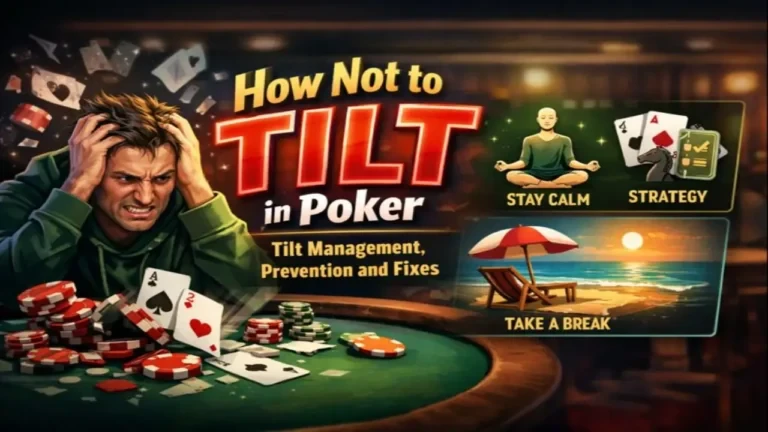
Every poker player has been there: a brutal bad beat, a stack cut in half, and suddenly you’re calling off chips with a hand you’d normally muck without a second thought. That’s a tilt, and it’s arguably the single biggest leak separating break-even players from long-term winners. Whether you’re learning how to avoid tilt in poker, improving your poker mental game, or building solid poker bankroll management 2026 habits, this guide breaks down what tilt actually is, why it happens even to strong players, and the bankroll and mental-game systems that keep it from wrecking your results.
What Is Tilt, Really?
Tilt is the state of emotional deterioration that follows a bad beat or a rough stretch, where frustration starts overriding logical decision-making. It’s not just “playing angry”, it shows up as loosening your starting hand requirements, over-bluffing, chasing losses with bigger bets, or abandoning a strategy that was working just because it stopped paying off in the short term. Understanding poker psychology, tilt control strategies, and poker variance explained is essential for recognizing these warning signs before they damage your results.
What makes tilt dangerous is that it rarely feels like a mistake while it’s happening. The frustration that follows a bad beat gradually overrides logical decision-making, which is part of why serious players now approach mental preparation the way athletes approach physical training, treating emotional regulation as a trainable skill rather than a fixed personality trait. Pairing that mindset with effective stop-loss poker rules and disciplined bankroll rules for cash games and tournaments gives players a practical framework for protecting both their confidence and their bankroll over the long run.
Why Tilt Happens — Even to Good Players
Tilt isn’t a beginner’s problem. It’s a math-and-psychology problem, and understanding the math actually helps with the psychology.
- Variance is brutal, even when you’re playing correctly. In cash games, standard deviation typically runs between 80 and 120 big blinds per 100 hands depending on your style and the game conditions — meaning a third of your sessions will land outside your “expected” range purely by chance, regardless of skill.
- Tournaments are worse. Over a sample of one million hands, even a strong player can run into multiple downswings in the 35-to-37-buy-in range, which is why a shallow bankroll gets wiped out by nothing more than normal variance, not bad play.
- Emotional regulation is a skill gap, not a talent gap. Research points to emotional regulation as one of the key factors that separates experienced professionals from amateurs, since players who stay in their A-game longer are able to delay or avoid tilt altogether.
Signs You’re Already Tilting
Catching tilt early is most of the battle. Common signs include:
- Playing hands you’d normally fold, “just to get the money back”
- Increasing bet sizes to force a result rather than following your plan
- Replaying the last bad beat in your head instead of reading the current hand
- Feeling the urge to move up in stakes right after a loss
- Ignoring your own stop-loss because “this next hand will fix it”
Bankroll Discipline: Your First Line of Defense Against Tilt
Bankroll management and tilt control are inseparable. A shot-taking, undisciplined bankroll is what turns one bad session into a career-ending one — and a well-sized bankroll removes a huge amount of the emotional pressure that causes tilt in the first place.
| Format | Recommended Bankroll | Why |
| Cash Games | 20–30 buy-ins at your stake | Results are comparatively stable session to session |
| Live Tournaments | 50–100 buy-ins | Top-heavy payout structures mean infrequent but large cashes |
| Online MTTs | 100+ buy-ins | Bigger fields and brutal variance require a deeper cushion |
| Session Stop-Loss | 3–6 buy-ins per session | Acts as a circuit-breaker before tilt-driven decisions take over |
Bankroll management is widely considered the single most important skill separating winning tournament grinders from broken ones, especially as fields grow bigger and tougher every year. A simple rule many pros follow: if a downswing pushes your roll below the threshold for your current stake, drop down a level until you rebuild — protecting both your finances and your mental state at the same time.
Building Your Own Tilt-Control System
1. Separate poker money from life money. Your bankroll should be money you can afford to lose without touching rent, bills, or savings. This separation alone reduces the emotional weight behind every decision, because a losing session stops feeling like a personal financial crisis.
2. Set, and actually honor, a stop-loss. Decide before you sit down how many buy-ins you’re willing to lose in a session. Setting stop losses helps stop small, ordinary losses from spiraling into much bigger bankroll damage, and it matters even more if tilt or other mental-game issues are already a known problem for you. The key is enforcing it even when you’re convinced the next hand will turn things around.
3. Track your sessions, not just your feelings. Tools like PokerTracker 4 or Hold’em Manager 3 log win rates, hand histories, and long-term trends, which helps you separate a normal downswing from an actual leak in your game. Reviewing the data with a clear head — after the session, not during it, turns emotional reactions into objective adjustments.
4. Build a “life-roll” cushion. Keeping a separate emergency fund outside your poker bankroll removes financial stress from your decision-making at the table, since you’re no longer playing scared that a downswing will affect your actual bills.
5. Use a physical or mental reset between hands. A short walk, a few deep breaths, or simply standing up after a big loss creates space between the emotional spike and your next decision — small, but often enough to stop one bad beat from becoming three.
6. Review, don’t relive. There’s a difference between studying a hand you played badly and replaying it on a loop for emotional reasons. Structured review — ideally away from the table — builds skill; in-the-moment replaying just feeds tilt.
A Quick Gut-Check Before Every Session
- Am I playing this stake because I can afford the variance, or because I’m chasing a previous loss?
- Do I have a stop-loss set, and will I actually follow it?
- Is my “poker money” separate from money I need for anything else?
- Am I mentally rested, or am I sitting down already frustrated from something off the table?
If any of these answers make you uncomfortable, that discomfort is worth listening to before you buy in.
Final Thoughts
Tilt isn’t a character flaw, it’s a predictable response to variance that every player, from recreational grinders to WSOP bracelet winners, has to manage. The players who last are rarely the ones who never feel frustration; they’re the ones who’ve built bankroll and mental-game systems that keep frustration from making the decisions for them. Solid bankroll discipline removes a huge share of the emotional pressure that causes tilt in the first place, which makes it, in a very real sense, the foundation of the mental game.
FAQs
1. What is tilt in poker?
Tilt is an emotional state where frustration or anger affects your decision-making, causing mistakes like chasing losses, bluffing too much, or playing weak hands.
How can I avoid tilt in poker?
You can avoid tilt by following solid poker bankroll management, using stop-loss rules, taking short breaks after bad beats, and focusing on long-term results instead of individual sessions.
3. What is a good bankroll for poker?
A common guideline is 20–30 buy-ins for cash games, 50–100 buy-ins for live tournaments, and 100+ buy-ins for online MTTs to handle normal poker variance.
Why are stop-loss rules important in poker?
Stop-loss poker rules help limit losses during emotional sessions, preventing tilt from turning a small downswing into significant bankroll damage.
Can professional poker players experience tilt?
Yes. Even top professionals experience tilt. The difference is that they rely on strong poker psychology, mental game routines, and bankroll discipline to regain control quickly.
Disclosure: PokerClubGames may earn a commission when you use links to poker operators. This never changes the price you pay. 18+ (21+ where required). Gambling involves risk. How we make money