
Tanking Has Become the WSOP’s Biggest Talking Point, But Is There a Fix Everyone Can Live With?
On this page
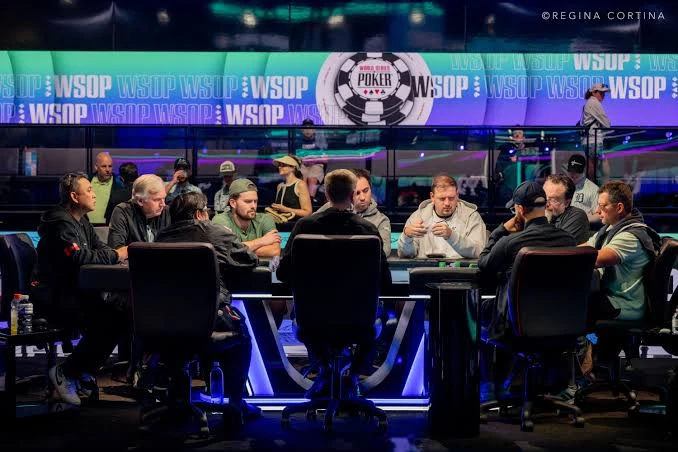
Poker’s biggest tournament of the year just made its biggest rule change in decades, and it happened overnight, mid-event, with zero warning to the field. If you’ve been following the 2026 WSOP Main Event, you already know why. If you haven’t, here’s the short version: a player took more than 15 minutes to make a single decision on Day 6, tournament officials had seen enough, and by the time Day 7 started the following morning, a shot clock was suddenly in effect for the first time in the 57-year history of the event.
What follows is one of the more genuinely interesting debates poker has had in years, not because anyone disputes that excessive tanking is a problem, but because almost nobody agrees on the right way to fix it.
What Actually Happened on Day 6
With 72 players left and a pay jump on the line, a four-time WSOP champion found himself with one chip behind after committing most of his stack preflop. Rather than act promptly, he sat on the decision for over 15 minutes, apparently hoping another table would produce a bustout that would lock in a better payday before he had to commit. A tournament supervisor eventually stepped in and put him on a one-minute clock. He shoved with seconds to spare and was eliminated in 72nd place anyway, missing the exact pay jump he’d been stalling for.
The moment blew up on social media, and it wasn’t an isolated incident, Day 6 reportedly featured several other lengthy tanks as the money bubble approached. By the next morning, officials announced a rule that had never applied to the Main Event before: players would now face a running clock on every decision.
The New Rules, in Plain English
Under the system rolled out on Day 7, players get 20 seconds to act preflop and 30 seconds per street after the flop. Each player also starts with a stack of 30-second time bank cards to burn on tougher spots, six to begin with, with WSOP officials later handing out additional cards as the day wore on. Miss the clock entirely on a bet you’re facing, and your hand is ruled dead. The WSOP’s own rulebook, under section 80, has technically always given officials the authority to introduce a tournament-wide clock at any point; this was simply the first time that authority got used in the Main Event itself.
To put the scale of this year’s field in context: the 2026 Main Event drew 9,208 entries, the fourth-largest turnout in the tournament’s history, generating an $85.6 million prize pool. The field had already been whittled from that starting number down to 62 players by the time the clock was introduced, and by July 13, the same day this piece is being written, the final nine players were set, with the delayed live final table returning to Las Vegas for an ESPN broadcast running August 3 through 5.
Why This Split the Player Pool So Fast
The disagreement isn’t really about whether tanking is a problem. It’s about who a shot clock actually helps.
High-stakes pro Chris Brewer was among the first to push back publicly, arguing that a rigid clock hands a real edge to players who already grind shot-clock formats regularly, at the expense of recreational players who’ve never had to operate under one. That’s a fair concern in a tournament where a huge share of the remaining field is made up of players who saved for years and qualified through satellites just to be there.
Reigning WSOP Player of the Year Shaun Deeb took the opposite side. Speaking after his first level back under the new rule, he called it a “necessary evil” for the stage of the tournament they’d reached, and pointed out that it’s typically the professionals, not the recreational players, who are responsible for the longest tanks in the first place. Under that reading, a clock arguably protects amateurs from having their tournament life stalled out by a seasoned grinder milking a decision.
Others objected less to the concept and more to the timing. Poker commentator David Williams argued officials should simply have used discretion on egregious cases rather than imposing a blanket rule on the whole field, and a handful of players who described themselves as pro-shot-clock in general still called the mid-tournament rollout unfair to a field that had prepared for one set of rules and got another with no notice.
How the WSOP’s New Rule Compares to Other Tours
The WSOP Main Event was actually one of the last major tournaments to hold out against some form of shot clock. The World Poker Tour and PokerGO Tour have both used action clocks for years without much controversy. WSOP Europe’s Main Event in Prague already runs on one. And the European Poker Tour uses a phased approach worth paying attention to: no clock at all in the early levels, one introduced only once the tournament reaches its later stages, shorter decision windows than the WSOP’s current setup, and an escalating penalty — a five-second clock, for players who are caught deliberately stalling.
There’s also a more radical model getting attention from top players: a chess-style clock, already tried on the Triton Poker Series, where each player manages a single time bank for the entire day rather than a fixed window per decision. It lets players burn extra time on the hands that matter and move quickly through the routine ones, without needing dealers or floor staff to police individual tanks. Daniel Negreanu, fresh off winning his eighth career bracelet this summer, has publicly praised the format, and Phil Hellmuth has said that while he personally plays fast, he understands why some hands genuinely warrant more time.
What This Means Going Forward
None of the options on the table are free of trade-offs. Reverting to no clock at all risks another headline-grabbing 15-minute tank, but it preserves the drama that makes deep Main Event hands must-watch television, especially with ESPN now broadcasting live. A permanent shot clock speeds things up but changes the texture of the game for players who’ve never had to operate under time pressure before. A phased-in EPT-style approach threads the needle in theory but adds complexity. A chess clock removes the need for on-the-spot policing entirely, but it’s still an unfamiliar system to most of the recreational field this tournament depends on.
What’s clear is that this conversation isn’t going away once this year’s Main Event wraps. With the final table now set and three weeks to go before it plays out live on ESPN, expect the shot clock decision, and whether it sticks around for good, to remain one of the more debated storylines heading into August.
FAQs
1. Why did the WSOP introduce a shot clock in the 2026 Main Event?
The shot clock was introduced after several lengthy tanking incidents, including one decision that lasted over 15 minutes.
2. How does the WSOP shot clock work?
Players receive 20 seconds preflop, 30 seconds postflop, plus time bank cards for extra thinking time.
3. Do other major poker tours use shot clocks?
Yes. Tours like the World Poker Tour, PokerGO Tour, and European Poker Tour already use shot clocks in many events.
4. Why is the shot clock controversial?
Some players believe it speeds up play fairly, while others feel it puts recreational players at a disadvantage.
5. Could the WSOP keep the shot clock in future Main Events?
It’s possible. The 2026 trial may influence whether the WSOP adopts a permanent shot clock for future Main Events.
Disclosure: PokerClubGames may earn a commission when you use links to poker operators. This never changes the price you pay. 18+ (21+ where required). Gambling involves risk. How we make money