
The Importance of Monitoring Stack Sizes in Poker: A Tactical Guide
On this page
Last Updated on September 23, 2026 by Bala Kumar
Most tournament players glance at their own chips and move on. The players who go deep regularly do something different. Before every decision, they scan the whole table.
Who’s short and desperate? Who’s sitting comfortably? Who has enough chips to end your tournament in one hand?
That habit of watching every stack, not just your own, is one of the most underrated edges in tournament poker. This guide is about building that habit and turning what you see into better decisions.
A $305,000 Lesson From Two Weeks Ago
At the $200,000 Triton Invitational in Jeju earlier this month, the tournament drew 173 entries, creating a $34.6 million prize pool paid to the top 31 finishers. Everyone who survived the bubble was guaranteed at least $305,000.
Semi Sun of the Philippines went into hand-for-hand play as the chip leader at his table, sitting on around 59 big blinds, while many players in the room had fewer than 10 and plenty more had fewer than 20. In other words, he was in the perfect spot to pressure the short stacks and coast into the money.
But at his own table, the stack picture had just changed. Yang Wang had been at risk minutes earlier, then doubled up with pocket aces against Jesse Lonis’s pocket jacks to become the table chip leader.
Then Sun and Wang tangled. On a final board of 7♣ 7♠ 8♠ A♥ Q♠, Sun held 8♣ 5♣ and shoved for 2,100,000 as a bluff, into one of the only players in the tournament who had him covered. Wang called instantly with A♦ 7♥ for a full house, and Sun was out on the bubble with nothing.
Poker hands can go wrong for plenty of reasons. But the stack lesson here is hard to miss: the one player at the table you least want to bluff on the bubble is the player who covers you. Sun had 20 comfortable targets in the room and picked a fight with the one who could send him home.
That’s what this guide is about.
Why Your Stack Alone Isn’t Enough
Your stack tells you what you can afford to do. Your opponents’ stacks tell you what they can afford to do, and that’s what really drives the hand.
Every player at the table is making decisions based on their own chips. A short stack is looking for a spot to double. A comfortable middle stack wants to avoid disasters. A big stack wants to apply pressure without risking too much. If you know where each player sits, you can predict their behavior far more accurately than by cards alone.
Think of it this way: stack sizes reveal motivation. And motivation predicts action.
The Four Players You Need to Identify
Every time you sit down, or whenever the table changes, sort your opponents into four groups. This takes seconds once it becomes routine.
1. The Players Who Cover You
These are the stacks bigger than yours. They’re the only players at the table who can eliminate you in a single hand.
Tactical takeaways:
- Be careful bluffing them in big spots, especially near pay jumps. They can call you down knowing a loss won’t knock them out.
- Pick your all-in spots against them carefully. When you shove into a covering stack, you’re risking your whole tournament.
- Notice if a covering stack is aggressive. They’ll often use their chip advantage to push you around, and you’ll need stronger hands to fight back.
2. The Players You Cover
These are the stacks smaller than yours. They can hurt you, but they can’t bust you.
Tactical takeaways:
- These are your natural targets for pressure. Every all-in against you is a risk to their tournament life.
- When they shove, remember that you’re only risking part of your stack. That often justifies calling a little lighter.
- Near the bubble, medium stacks you cover will fold hands they’d normally play. Take advantage.
3. The Desperate Short Stacks
Players with very few big blinds left are playing a different game. They need to double up soon, so they’ll shove wide.
Tactical takeaways:
- Expect their shoving ranges to be wider than their normal play.
- Call their shoves with a broader range than you’d use against a tight player, especially when the call is cheap relative to your stack.
- Be aware that they may have just a few hands before the big blind hits them. A short stack one seat before the blinds is often shoving very wide.
4. The Comfortable Middle
These players have enough chips to wait but not enough to take big risks. They’re often the tightest players at the table, particularly near a pay jump.
Tactical takeaways:
- Their raises and calls near the bubble usually mean real strength. Respect them.
- They’re good players to steal blinds from, because they’d rather fold than risk a big confrontation.
- When they suddenly play a big pot, slow down.
Build a Stack-Scanning Routine
Monitoring stacks only works if you actually do it. Here’s a simple routine to use at the table.
When the blinds go up: Rescan the whole table. Everyone’s stack just got relatively smaller, and short stacks may have crossed into desperate territory.
After every big pot: The stack order at your table may have completely changed, just like it did at Sun’s table when Wang doubled up. Update your mental map immediately.
Before you enter a pot: Check the players still to act behind you. Who can shove over the top? Who can call a shove from you?
Before any all-in decision: Ask one simple question: “If I’m wrong, am I out?”
When a new player sits down: A fresh arrival from a broken table may bring a big or tiny stack that changes the dynamics.
How to Actually Track Opponents’ Stacks
In live poker, you usually can’t see exact counts, but you can get close.
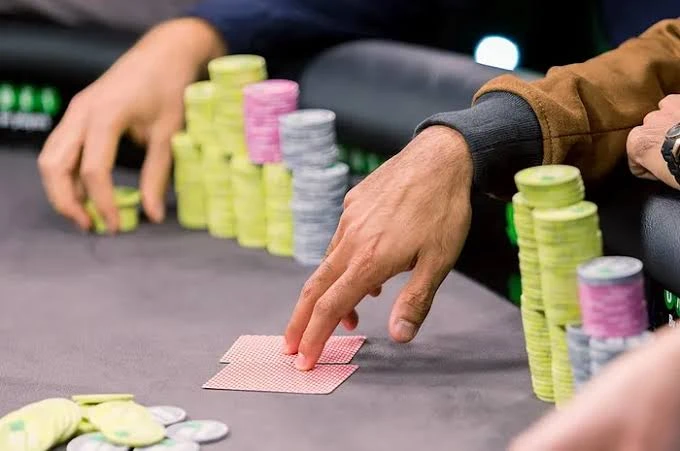
Learn to estimate chip stacks visually. Chips are usually kept in stacks of 20. Once you know the value of each color, you can estimate a stack quickly by counting towers.
Ask for a count when it matters. Under common tournament rules, you’re entitled to a reasonably accurate count of an opponent’s stack when you’re facing a bet. Big-value chips should be kept visible, so don’t be shy about asking in a big spot.
Use live updates and tournament apps. Many major events now publish chip counts, the average stack, and players remaining. Check them during breaks so you know where you stand relative to the field, not just your table.
Watch the tournament clock. Most events show the average stack and players left. Comparing your stack to the average tells you whether you need to take risks or can afford to wait.
Table Stacks vs. Field Stacks
Here’s an important difference many players miss. You need to track two separate pictures:
| What to Track | Why It Matters |
| Your table’s stacks | Decides who you can pressure and who can bust you in each hand |
| The field’s stacks | Tells you how close you are to the money and how others will behave |
| The average stack | Shows whether you need to gamble or can afford patience |
| Players left to the next pay jump | Determines how much pressure short and medium stacks are under |
For example, if you’re the short stack at your table but there are a dozen shorter stacks elsewhere in the room near the bubble, you can afford to be patient. They’ll likely bust before you. On the other hand, if you’re the shortest stack in the field, waiting only makes things worse.
Final Table Stack Monitoring
At a final table, every elimination means a pay jump, and stack monitoring becomes even more important.
Know the pay ladder. Before you play, look at how much each finishing position pays. The bigger the jumps, the more you should factor stack sizes into your choices.
Watch the short stacks at other positions. If two players are nearly out of chips, a medium stack often gains a lot of money just by folding and letting them bust first.
Big stacks should apply pressure selectively. As a chip leader, attack the medium stacks who fear busting before the short stacks. Avoid unnecessary battles with the second-biggest stack, since they’re the one player who can seriously damage your position.
That last point loops right back to the Semi Sun hand. The chip leader’s job is to pressure the players who can’t fight back, not to go to war with the only stack that can.
Common Stack Monitoring Mistakes
Only watching your own chips. This is the most common and most costly mistake. You’re playing against stacks, not just cards.
Forgetting to update after big pots. Stack order can flip in a single hand. Yesterday’s short stack might be today’s chip leader.
Bluffing the covering stack at the worst time. A bluff into a player who can bust you near a pay jump carries enormous risk for a small reward.
Ignoring the rest of the room. Your table’s dynamics don’t exist in isolation. The field’s situation affects how everyone plays.
Calling short-stack shoves too tightly. Desperate players shove wide. Punish them when the price is right.
Stack Monitoring Checklist
Print this out, save it on your phone, or just memorize it:
- ✅ Who covers me at this table?
- ✅ Who do I cover?
- ✅ Who’s short and desperate?
- ✅ Who’s in the cautious middle?
- ✅ How does my stack compare to the tournament average?
- ✅ How close are we to the next pay jump?
- ✅ If I’m wrong in this hand, am I out?
Final Thoughts
Great tournament players don’t just play their cards. They play the table. And the table is defined by stacks.
When you consistently track who can hurt you, who you can pressure, and how close everyone is to their breaking point, you’ll start spotting profitable steals, making better calls, and avoiding the kind of disaster that knocked a chip leader out of a $34.6 million tournament just before the money.
Your stack gets you in the game. Everyone else’s stack tells you how to win it.
Please play responsibly. Poker should be enjoyable, so only play with money you can afford to lose.
FAQs
1. Why is monitoring opponents’ stack sizes important in tournament poker?
Tracking other players’ stacks helps you identify who you can pressure, who can eliminate you, and who may be forced to take risks.
2. What is a covering stack in poker?
A covering stack is a player’s stack that is larger than yours. They can potentially eliminate you in a single all-in hand, making stack awareness especially important in major pots.
3. When should poker players rescan stack sizes?
Rescan the table when blinds increase, after a major pot, before entering a hand, before an all-in decision, and whenever a new player joins the table.
4. How do stack sizes affect bubble and final-table strategy?
Near the bubble or final table, stack sizes influence risk tolerance because players may fold more often to avoid elimination or protect themselves from losing a major pay jump.
5. Should you track the tournament average stack as well as your table’s stacks?
Yes. Your table’s stacks determine immediate tactical matchups, while the tournament average and field distribution show your overall position and how much pressure you may need to apply.
Disclosure: PokerClubGames may earn a commission when you use links to poker operators. This never changes the price you pay. 18+ (21+ where required). Gambling involves risk. How we make money