
Last Updated on June 23, 2026 by Bala Kumar
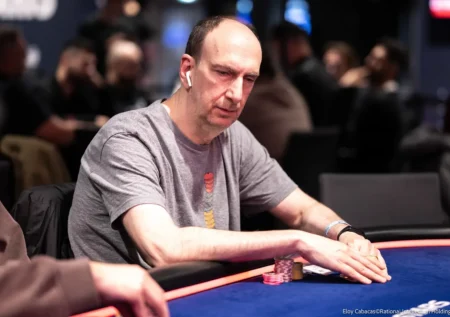
Erik Seidel is widely recognised as one of the greatest professional poker players in the history of the game. Known by the nickname “The Silent Assassin,” Seidel built an elite reputation through his calm, disciplined playing style, extraordinary consistency across decades, and razor-sharp tournament instincts.
The New York-born poker legend has won 10 World Series of Poker (WSOP) bracelets, tied for third all-time behind only Phil Hellmuth (17) and Phil Ivey (11) , and has accumulated nearly $50 million in recorded live tournament earnings as of 2026. Inducted into the Poker Hall of Fame in 2010, Seidel remains one of the most respected figures in professional poker.
His best single year in live earnings was 2011, when he won more than $6.5 million, briefly topping the All-Time Money List before being surpassed by Daniel Negreanu. Despite his extraordinary achievements, Seidel is famously private, preferring to let his results speak for themselves.
| Category | Information |
|---|---|
| Full Name | Erik Seidel |
| Poker Nickname | The Silent Assassin / Seiborg |
| Date of Birth | November 6, 1959 |
| Age (2026) | 66 years old |
| Birthplace | New York City, USA |
| Nationality | American |
| Residence | Las Vegas, Nevada |
| Profession | Professional Poker Player |
| WSOP Bracelets | 10 (Tied 3rd All-Time) |
| WSOP Cashes | 172+ (Top 10 All-Time) |
| WSOP Final Tables | 51+ |
| WPT Titles | 1 |
| WPT Cashes | 31 |
| EPT Cashes | 6 |
| Poker Hall of Fame | Inducted in 2010 |
| Total Live Earnings | $49,947,987+ (2026) |
| All-Time Money Rank | Approximately 15th (2026) |
| Best Single Cash | $2,472,555 |
| Best Year | 2011 ($6.5M+ in live earnings) |
| Latest Recorded Cash | $14,700 (April 11, 2026) |
| Career Status (2026) | Semi-retired (due to U.S. gambling tax changes) |
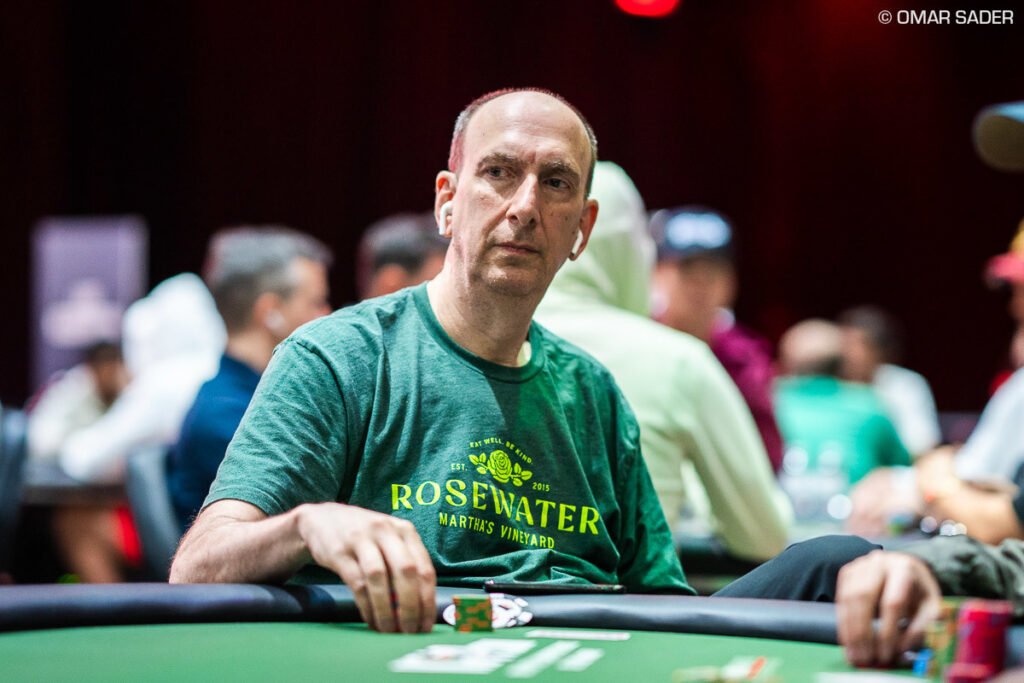
Erik Seidel was born on November 6, 1959 in New York City. His path to professional poker was unlike most, it ran through competitive backgammon and the New York Stock Exchange before arriving at the felt.
As a young man, Seidel dropped out of college to pursue tournament backgammon professionally. He became one of the most competitive backgammon players in the country, developing the probabilistic reasoning, risk management, and psychological composure that would later define his legendary poker game.
During this formative period, Seidel became a member of the legendary Mayfair Club in New York City — an elite intellectual gaming club whose alumni roster reads like a Who’s Who of poker history. His fellow club members included Dan Harrington, Howard Lederer, and Steve Zolotow — all future WSOP champions. The club’s culture of rigorous analytical thinking and fierce competition was the true crucible of Seidel’s elite skills.
After backgammon, Seidel worked as a trader on the American Stock Exchange to build financial security. A trip to Las Vegas for a backgammon tournament exposed him to poker, and he quickly recognised that his mathematical and psychological toolkit gave him a natural edge. He soon relocated his family from New York to Las Vegas to pursue poker full-time.
Before winning his first bracelet, Erik Seidel played the most famous hand of his career — and one of the most iconic hands in the entire history of poker. In his very first major tournament, Seidel reached the heads-up finale of the 1988 WSOP Main Event.
Facing two-time defending champion Johnny Chan at the final table, Seidel was eliminated in the last hand and finished runner-up for $280,000. Chan’s victory was dramatic, but it was the final hand itself that achieved immortality: it was featured in full in the 1998 Hollywood film Rounders — the movie widely credited with igniting the global poker boom and inspiring an entire generation of players to take up the game.
For most players, a runner-up finish on that stage would have been the defining moment of a career. For Seidel, it was merely the starting line.
▪ The 1988 final hand between Seidel and Chan was recreated in the film Rounders (1998).
▪ The film starred Matt Damon and Edward Norton and is considered the most influential poker movie ever made.
▪ Rounders is credited with inspiring millions of new players worldwide to learn and play poker.
▪ Seidel’s presence in the film gave him a unique cultural footprint far beyond the poker world.
Erik Seidel’s 10 WSOP bracelets span five decades and six distinct poker game formats, an exceptional range of mastery that very few players in history can match.
| Year | Tournament | Prize |
| 1992 | $2,500 Limit Hold’em | $168,000 |
| 1993 | $2,500 Omaha 8 or Better | $94,000 |
| 1994 | $5,000 Limit Hold’em | $210,000 |
| 1998 | $5,000 Deuce-to-Seven Draw | $132,700 |
| 2001 | $3,000 No-Limit Hold’em | $411,300 |
| 2003 | $1,500 Pot-Limit Omaha | $146,100 |
| 2005 | $2,000 No-Limit Hold’em | $611,795 |
| 2007 | $5,000 No-Limit Deuce-to-Seven Draw (with Rebuys) | $538,835 |
| 2021 | $10,000 Super MILLION$ High Roller Online (GGPoker) | $977,842 |
| 2023 | $50,000 Super High Roller – WSOP Paradise (Bahamas) | $1,704,400 |
His 2023 victory in The Bahamas was his first seven-figure WSOP cash and his 10th bracelet — making him only the fourth player in history to reach that milestone, joining Phil Hellmuth, Phil Ivey, and Doyle Brunson. His 2021 online bracelet on GGPoker was notable for coming after a 14-year bracelet drought — demonstrating that elite skills do not diminish with age.
World Poker Tour (WPT) Results
| Year | Event | Prize |
| 2008 | WPT Foxwoods Poker Classic — Winner | $992,890 |
| 2011 | WPT Hollywood Open — Runner-Up | $155,103 |
His Season 6 WPT Foxwoods win established him as a dominant force across all major live circuits. He has 31 recorded WPT cashes and 9 WPT final tables.
European Poker Tour (EPT) — Historic Super High Roller Win
| Year | Event | Prize |
| 2015 | EPT Grand Final €100,000 Super High Roller — Monaco — Winner | €2,015,000 |
The 2015 EPT Monaco Super High Roller remains one of the most prestigious and expensive tournament victories of his career, confirming his dominance on the European circuit and in elite high-stakes poker globally.
PokerGO Tour & High Roller Circuit
Beyond WSOP and WPT, Erik Seidel has been a fixture on the modern high-roller circuit, regularly competing in Super High Roller Bowl events and PokerGO Tour tournaments. Notable recent results include:
| Year | Event | Prize |
| 2022 | US Poker Open — PokerGO Tour (Winner) | $472,500 |
| 2024 | US Poker Open Event #1, $5,100 NLHE — Winner | $145,000 |
| 2024 | Seminole Hard Rock Poker Open $10,000 Deep Stack — Winner | Undisclosed |
His 2024 US Poker Open victory, his second tournament win of that year, was particularly significant as it came at age 64, proving his continued elite form against some of the best young players in the world.
Total Recorded Live Earnings
$49,947,987+
| Circuit | Earnings |
| World Series of Poker (WSOP) | $10,180,220+ — 172 cashes, 51 final tables, 10 bracelets |
| World Poker Tour (WPT) | $2,574,537+ — 31 cashes, 9 final tables, 1 title |
| European Poker Tour (EPT) | $130,732+ — 6 cashes |
| All Other Circuits | ~$37M+ — High Roller events, PokerGO Tour, etc. |
These figures represent only documented, publicly recorded live tournament earnings. High-stakes cash game winnings, believed to be substantial, are not included.
| Event | Finish | Prize |
| EPT Grand Final €100K Super High Roller (Monaco) | Winner | €2,015,000 |
| WSOP Paradise $50K Super High Roller (Bahamas) | Winner | $1,704,400 |
| WPT Foxwoods Poker Classic | Winner | $992,890 |
| WSOP $10K Super Million$ High Roller Online (GGPoker) | Winner | $977,842 |
| US Poker Open PokerGO Tour | Winner | $472,500 |
| WSOP $2,000 No-Limit Hold’em | Winner | $611,795 |
| WSOP $3,000 No-Limit Hold’em | Winner | $411,300 |
| 1988 WSOP Main Event | Runner-Up | $280,000 |
| US Poker Open Event #1 (2024) | Winner | $145,000 |
Seidel’s nickname is no accident. His playing style is defined by a psychological stillness that gives opponents almost nothing to read. He rarely speaks at the table, never reacts visibly to outcomes, and projects a calm that is itself a strategic weapon. In an environment where many players broadcast their emotional state through behaviour and speech, Seidel’s silence is information denial.
Seidel is regarded as one of the finest live hand readers in the world. His methodology includes:
• Bet-sizing deviation tells, identifying when a player’s sizing breaks from their established patterns
• Timing reads, using the speed of decision-making as an indicator of confidence and hand strength
• Positional information weighting, adjusting the value of reads based on voluntary vs. involuntary information
• Long-session profiling, building detailed, evolving opponent models over many hands
Unlike players who apply constant pressure, Seidel is surgical. Every bet and raise serves a precise purpose. He does not spew chips in pursuit of aggression as a style — he maximises value with strong holdings and applies pressure only when the mathematical and psychological conditions favour it.
His 10 bracelets span Limit Hold’em, No-Limit Hold’em, Omaha 8-or-Better, Pot-Limit Omaha, and multiple Deuce-to-Seven Draw variants. This breadth of mastery across fundamentally different game formats is extraordinarily rare and reflects the deep analytical foundation built during his backgammon years.
Seidel adjusts continuously across all stages of a tournament:
• Early: Patient and conservative, minimising unnecessary variance
• Mid-game: Selective aggression to build a workable stack for the later stages
• Final table: Precise application of pressure, especially short-handed
• Heads-up: Highly adaptable and unpredictable, with refined skills across decades
In 2010, Erik Seidel was inducted into the Poker Hall of Fame — the game’s highest honour, reserved for players who have demonstrated sustained excellence at the highest level, significantly contributed to the growth of poker, and proven their abilities against the best competition across a long career.
At the time of his induction, Seidel already held eight WSOP bracelets and over two decades of elite results. He has continued adding to his legacy every year since, winning his 9th bracelet in 2021 and his 10th in 2023, demonstrating that his Hall of Fame credentials continue to grow, not merely commemorate past achievement.
One of the most important and least-discussed chapters of Erik Seidel’s development took place at the Mayfair Club in New York City, a legendary intellectual gaming club that became a breeding ground for some of poker’s greatest minds.
Seidel was one of its most active members alongside future poker legends:
• Dan Harrington, 1995 WSOP Main Event champion, two-time bracelet winner, author of Harrington on Hold’em
• Howard Lederer, “The Professor,” two-time WSOP bracelet winner and PokerStars ambassador
• Steve Zolotow, Veteran high-stakes cash game specialist and tournament player
The Mayfair Club’s culture of deep analytical thinking and competitive intensity gave Seidel a foundational edge that most players of his generation simply never had access to.
While Seidel built his reputation in live tournament poker, he has proven equally capable in online competition. In 2021, taking advantage of pandemic-era WSOP bracelet events hosted online, Seidel travelled to play on GGPoker, one of the world’s largest and most prestigious online poker platforms.
The outcome was historic: his 9th WSOP bracelet via the $10,000 Super Million$ High Roller Online event for $977,842. It was his most profitable single cash at the time, and it validated what the poker world already suspected, that Seidel’s elite live reads and decision-making translate seamlessly to the digital environment.
He has continued competing selectively in online high-roller events alongside his live tournament schedule.
One of the most unique and widely publicised chapters of Erik Seidel’s career is his mentorship of New York Times bestselling author and psychologist Maria Konnikova, an experience that became the subject of the celebrated book The Biggest Bluff: How I Learned to Pay Attention, Master Myself, and Win (Penguin Press, 2020).
Konnikova, who had no prior poker knowledge, approached Seidel, the only student he has ever taken on in his entire career, with a proposal to learn poker from scratch for one year in order to study decision-making, probability, and human psychology in a real-world competitive environment.
Under Seidel’s guidance, Konnikova went from complete novice to professional-level competitor within a single year, eventually winning the PCA National Championship in 2018 and earning hundreds of thousands of dollars in tournament prize money.
The Biggest Bluff — Key Facts
▪ Author: Maria Konnikova (psychologist, New York Times bestselling writer)
▪ Published: 2020 by Penguin Press
▪ New York Times Bestseller and New York Times Notable Book
▪ Documents Konnikova’s transformation from complete novice to tournament winner under Seidel’s coaching
▪ Seidel is the only student he has ever taken on in a coaching capacity
▪ Konnikova won the PCA National Championship (2018) during the year of her mentorship
▪ The book brought Seidel’s teaching philosophy and approach to a global mainstream audience
In December 2025, Erik Seidel made headlines well beyond the poker world when he publicly announced that changes to US gambling tax law would likely force him into semi-retirement — one of the most dramatic stories in modern poker.
President Donald Trump’s “One Big Beautiful Bill Act” (OBBBA), passed by Congress in 2025 and taking effect January 2026, introduced a new restriction on gambling loss deductions. Previously, professional gamblers could deduct 100% of their losses against their winnings for tax purposes. Under the new law, that deduction is capped at 90%.
For recreational gamblers, the impact is minor. For professional poker players who compete in high-volume, high-buy-in tournaments, the consequences are severe. The 10% loss deduction gap creates what tax professionals describe as “phantom income” , a situation where a player can owe tax on losses they could not fully deduct, even in a net-losing year.
Seidel’s Own Words (December 2025 – April 2026)
▪ “Very concerned about the tax change next year. It’ll put me in semi-retirement.” Twitter/X, December 2025
▪ “The margins are really, really thin. If you’re a professional poker player, you’re not even guaranteed to have a profit at the end of the year. This just creates a situation where it’s really untenable.” CNBC, April 2026
▪ “Even the elite players can’t overcome it.”, CNBC, April 2026
▪ “This is going to cost them tons of revenue and will cost people jobs.” PokerNews interview, December 2025
▪ “I can afford to not play as much, but it’s a devastating thing for people who are much younger than me.” CNBC, April 2026
Seidel followed through on his announcement. By April 2026:
• His tournament volume dropped from 100–150 events per year to approximately 25 (roughly one quarter of his prior schedule)
• He has largely eliminated high-roller events with buy-ins of $25,000 or more — the category he dominated for decades
• He told CNBC the situation is “really untenable” for professional poker players at all levels
Seidel was the first high-profile professional to speak publicly about the issue, but far from the last. Nevada Representative Dina Titus introduced the FAIR BET Act to restore the full deduction, attracting 21 co-sponsors including 8 Republicans. The provision failed in the Rules Committee in September 2025. Casino industry executives have warned of significant negative economic consequences for states where professional poker is a significant part of the gaming economy.
Seidel is intensely private about his personal finances. Based on verified tournament earnings and industry estimates, his net worth in 2026 is believed to fall in the range of:
$50 Million – $70 Million
| Income Source | Details |
| Live Tournament Winnings | $49.9M+ documented; ongoing but reduced in 2026 |
| High-Stakes Cash Games | Undisclosed; believed to be substantial across career |
| Stock Exchange Background | Built financial base before turning professional |
| Media & Book Royalties | Featured in Rounders; subject of The Biggest Bluff (NYT Bestseller) |
| Coaching (Limited) | One documented student: Maria Konnikova |
| Investments | Private; informed by Wall Street background |
Erik Seidel relocated from New York to Las Vegas in the early years of his professional poker career to be closer to the major tournament circuits. He is famously private about his family and personal relationships, and rarely discusses his personal life in media appearances.
When not competing, Seidel is known for:
• Music, a lifelong passion and one of his primary off-table interests
• Tennis, a regular physical activity throughout his adult life
• Family time, a consistent personal priority alongside his tournament schedule
• Backgammon, still engaged with the game that first developed his analytical skills
• Intellectual pursuits, the curiosity and rigour of the Mayfair Club culture has stayed with him throughout his career
| Production | Details |
| Rounders (1998) | The 1988 WSOP Main Event final hand featured in full; the most famous poker movie ever made |
| Lucky You (2007) | Cameo appearance in Drew Barrymore / Drew Barrymore poker drama |
| Curb Your Enthusiasm | Brief cameo appearance in the HBO comedy series |
| The Biggest Bluff (Book, 2020) | Central figure; featured throughout as Maria Konnikova’s mentor — NYT Bestseller |
| CNBC (April 2026) | Featured interview on gambling tax law impact on professional poker |
| PokerNews / CardPlayer | Regular profile subject and interviewee across career milestones |
| Platform | Details |
| Twitter / X | @Erik_Seidel — 92,000+ followers; occasional tournament updates and industry commentary |
| Limited public presence; very selective posting | |
| Hendon Mob | Full career database: pokerdb.thehendonmob.com |
| WSOP.com | Official career bracelet and cash records |
| CardPlayer.com | Active profile with 2026 earnings tracking |
| Statistic | Figure |
| Total Live Cashes | 464+ (Hendon Mob) / 458 (CardPlayer) |
| Total Earnings | $48.7M (Hendon Mob) / $49.9M (CardPlayer) |
| WSOP Bracelets | 10 (Tied 3rd All-Time) |
| WSOP Cashes | 172+ |
| WSOP Final Tables | 51+ |
| WPT Championships | 1 |
| WPT Final Tables | 9 |
| EPT Final Tables | — |
| Best Year | 2011 — $6.5M+ |
| Career Span | 1988 – 2026 (38 years at elite level) |
| Poker Hall of Fame | Inducted 2010 |
| 2026 Status | Semi-retired (reduced schedule due to US tax changes) |
Erik Seidel’s legacy is built on a body of evidence that very few players in any era have matched:
• Nearly 4 decades of elite play: Competing at the highest level continuously from 1988 to 2026, from the pre-boom era through the poker explosion, the online revolution, and the modern super high roller era
• 10 WSOP bracelets: Tied for 3rd all-time, spanning six distinct poker game formats across five decades
• ~$50M in documented earnings: Among the top 15 highest-earning live tournament players ever, with further cash game income undisclosed
• Poker Hall of Fame inductee: Recognised in 2010 for lifetime achievement; has continued adding to his legacy every year since
• The Rounders legacy: His 1988 Main Event final hand introduced millions worldwide to the drama and beauty of poker
• Rare game versatility: A proven winner in NLHE, Limit Hold’em, PLO, Omaha Hi-Lo, and multiple Draw variants
• Elite online transition: Won a WSOP bracelet online at GGPoker in 2021 at age 61, proving skills transfer across formats
• The Biggest Bluff impact: His mentorship of Maria Konnikova brought Seidel’s philosophy of poker and decision-making to a global mainstream audience
• Intellectual foundation: Competitive backgammon champion and former NYSE trader, analytical roots that run deeper than most
• Industry advocacy: Became the leading voice on the 2025–2026 US gambling tax issue, speaking publicly to defend all professional poker players
Erik Seidel remains one of the most influential and admired figures in professional poker history. From his iconic runner-up finish at the 1988 WSOP Main Event to winning his 10th bracelet in The Bahamas in 2023, from mentoring a complete novice to NYT-bestselling champion to becoming the face of the industry’s fight against unjust tax law, his career has been defined by quiet excellence, intellectual depth, and an unwillingness to ever accept the limits others might set for him.
He is the rare player who has never needed a catchphrase, a media persona, or controversy to build a reputation. Erik Seidel’s legacy is written entirely in results, in principles, and in the game itself. And in 2026, even in semi-retirement, he is still writing it.
| More Poker Player Profiles at PokerClubGames.comIndia’s most trusted independent poker resource. In-depth player profiles, platform reviews, strategy guides, and responsible gaming information, all in one place. ✔ Player Profiles & History ✔ Platform Reviews ✔ Beginner Strategy Guides ✔ Responsible Gaming ToolsVisit: pokerclubgames.com — Play Smart. Play Safe. |
Erik Seidel is an American professional poker player, Poker Hall of Fame member, and one of the most successful tournament players in poker history, with nearly $50 million in live earnings.
As of 2026, Erik Seidel has won 10 WSOP bracelets, tying him for third place on the all-time bracelet list.
His largest recorded live tournament payout is $2,472,555, earned during his long and successful high-stakes poker career.
Seidel earned the nickname because of his calm demeanor, quiet table presence, and ability to consistently defeat top players without attracting much attention.
Yes. Although considered semi-retired, Erik Seidel still plays select high-profile tournaments and continues to record live cashes in major poker events.




Explore BetRivers Poker’s $1,000 bonus, low rake, multi-state games, app features, and payment options in 2026.

Explore BetMGM Poker’s $1,000 bonus, soft games, MGM Rewards, mobile app, tournaments, and payment options in 2026.

Betcoin Poker has quickly become one of the most talked-about cryptocurrency poker platforms in online gaming history.

GGNetwork is a leading global poker network offering innovative games, massive tournaments, and exciting rewards for all types of players.

Explore unique "Expresso" games, high-traffic tournaments, and expert software insights.

Discover why their "No-HUD" policy, €500 playthrough bonus, and recreational-friendly software make it a top choice for beginners.
Explore BetRivers Poker’s $1,000 bonus, low rake, multi-state games, app features, and payment options in 2026.