

The Importance of Stack Size Tracking in Poker: A Comprehensive Guide
On this page
Ask a new player how many chips they have and you’ll usually get a shrug or a rough guess. Ask a seasoned tournament pro and you’ll get an answer in big blinds, followed by the stacks of the three players to their left. That difference tells you almost everything about who’s going to last longer.
Knowing that stack sizes matter is one thing. Actually tracking them, hand after hand, level after level, is a separate skill. It’s the habit that turns stack theory into real decisions at the table. This guide focuses on the “how” of stack tracking: what to watch, how to count, and how to use that information when it matters most.
Why Tracking Beats Guessing
Poker decisions are made with incomplete information. You can’t see your opponent’s cards, but you can see their chips. Stack sizes are one of the few pieces of perfect information available to you, and ignoring them is like throwing away a free clue.
When you track stacks consistently, you can answer questions that shape every hand:
- How much can I win or lose in this pot?
- Is my opponent likely to shove, call, or fold?
- Who at the table is under pressure, and who is applying it?
- How much time do I have before the blinds force my hand?
Players who guess at these answers make decisions based on feel. Players who track them make decisions based on facts.
A Stack Tells a Story: Following One Final Table
The best way to see why tracking matters is to watch how quickly stacks change in a single session. Take Daniel Negreanu’s run at this week’s WSOP Online $25,000 High Roller Championship final table on GGPoker, which he streamed live with cards visible.
| Moment | Negreanu’s Position |
| Start of final table | Third in chips, roughly 60 big blinds |
| After winning a big pot with pocket queens | Chip leader with seven players left |
| After losing a three-way all-in | Dropped to fifth in chips |
| After pocket fives won a race | Doubled up to about 18 big blinds |
| After a small river bet eliminated Pedro Neves | Back up to second in chips |
| Final hand (four-handed) | 28 big blinds, eliminated in fourth |
In a matter of hours, his stack swung from third, to first, to fifth, back to second, and then out. Every one of those stages called for a different strategy. A player who wasn’t tracking these shifts would have kept playing the same way throughout, and that’s how chips quietly disappear.
That last hand is especially telling. Chip leader Casimir Seire shoved nine-eight offsuit, and he covered Negreanu’s 28 big blinds by almost 30 more. Seire could afford to take the risk because he knew precisely how the stacks lined up. Negreanu called with pocket tens as a big favourite, but lost when Seire hit two pair on the turn.
Both players were reacting to the numbers in front of them. That’s stack tracking in action.
What You Should Be Tracking
1. Your Own Stack, in Big Blinds
This is the foundation. Raw chip counts are misleading because the blinds keep climbing. A stack of 50,000 chips might be 100 big blinds early on and 12 big blinds a few hours later.
Update your count every time the level changes. Better yet, update it after every significant pot.
2. The Effective Stack in Every Hand
The effective stack is the smaller of the two stacks in a pot. It sets the maximum you can win or lose against that player. If you have 70 big blinds and your opponent has 15, you’re playing a 15-big-blind hand, no matter how deep you are.
Before you enter any pot, identify who covers whom.
3. The Stacks Left to Act Behind You
When you’re opening a pot, the players still to act matter more than anyone else. A short stack in the big blind is likely to shove over your open. A big stack on the button can call you wide and pressure you after the flop. A medium stack in between is often the most reluctant to get involved.
Knowing these stacks lets you pick better spots to open, steal, or reshove.
4. The Table and Field Averages
In a tournament, your stack only means something relative to everyone else’s. Tracking the average stack tells you whether you’re comfortable or falling behind.
Consider the final day of the €400 Deepstack at the 2026 King’s Million European Poker Championship. With six players remaining, the average stack stood at about 10.5 million chips, while the blinds were 300,000/600,000 with a 600,000 ante. That works out to roughly 17 or 18 big blinds on average.
Even the players sitting on eight-figure chip counts were short relative to the blinds. Anyone who looked only at raw chips and felt comfortable would have been badly misjudging the situation.
5. The Payout Structure
As you approach the money or a final table, stacks and payouts have to be tracked together. In that same King’s Million event, the next elimination at six-handed was worth €11,200. When pay jumps are meaningful, short and medium stacks start playing more carefully, and big stacks can exploit that.
How to Track Stacks in Live Poker
Live poker makes tracking harder, because nobody displays their stack in big blinds for you. A few habits help a lot.
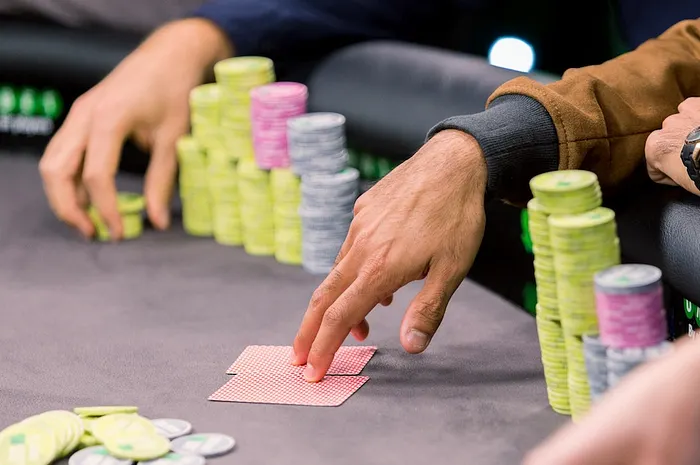
Stack your own chips neatly. Stacks of 20 chips of the same denomination make it easy to count at a glance.
Learn to estimate other stacks visually. Compare the height of an opponent’s stack to your own. With practice, you’ll get surprisingly accurate.
Ask when it matters. In most card rooms, you’re allowed to ask for a count of an opponent’s stack when you face a significant decision. Don’t be shy about it in big spots.
Keep a quick mental note of changes. When a player wins or loses a big pot, update your picture of the table immediately.
Follow live reporting at big events. Major tournaments publish chip counts throughout the day. At the King’s Million, for example, live updates tracked the players leading into the final day, with Dan Galinsch the only player holding more than 2 million chips at the restart. Reviewing these counts on breaks helps you understand where you stand in the field.
How to Track Stacks Online
Online poker makes tracking much easier, but many players still don’t take full advantage.
Display stacks in big blinds. Most major poker sites let you switch the stack display from chips to big blinds in the settings. Turn it on. It’s one of the simplest upgrades you can make.
Watch the lobby. The tournament lobby shows average stacks, your ranking, players remaining, and upcoming payouts. Check it regularly, especially near the bubble.
Use tracking software where allowed. Tools that record your hand histories can help you review how you played at different stack depths. Always check your poker site’s rules first, since some platforms restrict third-party tools.
Review your sessions. After playing, look at key hands and ask whether your decisions matched your stack size at the time.
Stack Tracking in Massive Fields
The bigger the tournament, the more important stack awareness becomes. The ongoing WSOP Online Main Event on GGPoker drew 6,008 entries across all flights, creating a $28.5 million prize pool, with a record $4 million going to the winner.
In a field that size, there’s constant pressure from the structure. The blinds keep rising, tables keep breaking, and you’re regularly moved to new tables with unfamiliar stacks. Players who reassess the stacks every time they sit at a new table adjust faster and make fewer costly mistakes.
Common Stack Tracking Mistakes
Only counting your own chips. Your stack means little without the context of everyone else’s.
Forgetting to update after a level change. Your strategy at 25 big blinds and at 18 big blinds should look noticeably different.
Confusing chips with big blinds. Large numbers feel safe. They often aren’t.
Ignoring the players behind you. The stacks yet to act can completely change whether an open or shove is profitable.
Not tracking the bubble and pay jumps. Stack decisions near the money carry real financial weight.
A Simple Stack Tracking Routine
Try this routine in your next tournament:
- At the start of every level, count your stack in big blinds.
- Glance around the table and note the biggest and smallest stacks.
- Before entering a pot, check the effective stack against each opponent still in the hand.
- After any big pot at your table, update your mental picture.
- On every break, check the average stack, your ranking, and the next pay jumps.
It sounds like a lot, but after a few sessions it becomes second nature.
Final Thoughts
Stack tracking isn’t glamorous, but it’s one of the most dependable edges in tournament poker. Cards come and go, and luck swings both ways, as that final table this week showed. What stays within your control is how clearly you see the situation in front of you.
When you always know where the chips are, you make fewer guesses and more decisions. Over hundreds of tournaments, that difference adds up to deeper runs, bigger scores, and a lot fewer “how did I bust?” moments.
Disclosure: PokerClubGames may earn a commission when you use links to poker operators. This never changes the price you pay. 18+ (21+ where required). Gambling involves risk. How we make money