
Poker Betting Strategy: Bet Sizing That Prints Money
On this page
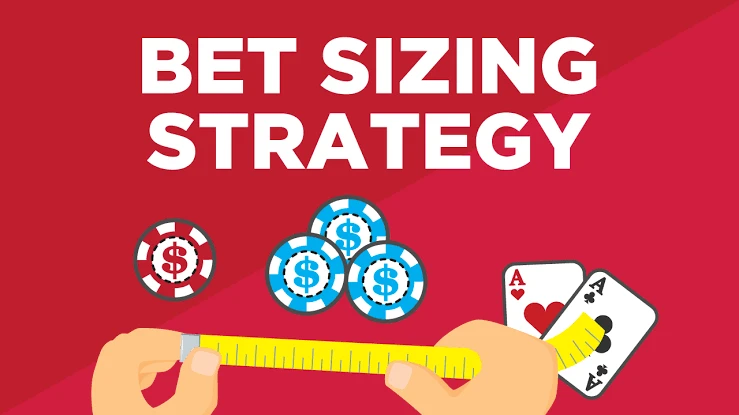
Most players lose money at the poker table not because they play the wrong hands, but because they bet the wrong amounts with the right ones. A rock-solid poker betting strategy isn’t about memorizing a single “correct” number, it’s about matching your bet size to the board, your opponent, and your goals on every single street. Get this right and you’ll find extra big blinds showing up in your win rate that were never there before.
This guide breaks down modern Texas Hold’em betting strategy street by street, then pivots to a completely different animal, 3 Card Poker betting strategy, where the entire game hinges on a single decision.
Why Bet Sizing Is the Skill Most Players Skip
Ask most players how they choose a bet size and you’ll hear “I bet two-thirds pot” or “I just bet what feels right.” Neither answer accounts for the three variables that actually determine a good size:
- Board texture — wet, coordinated boards call for different sizing than dry, disconnected ones
- Opponent tendencies — calling stations, nits, and aggressive regulars all require different treatment
- Stack-to-pot ratio (SPR) — every bet you make on one street resets the price for the next one
Ignoring any of these three levers is one of the most expensive leaks in the game, and it compounds every single hand you play.
Texas Hold’em Betting Strategy by Street
Preflop: Set the Tone With Your Open
Preflop is the one street where sizing follows near-mechanical rules. Standard opens run around 2.2x–3x the big blind online, and closer to 4x–5x in live games where limpers are more common. Opening bigger from early position isn’t just about extracting value — it also discourages the multiway pots that dilute your equity with strong hands like big pocket pairs.
Your 3-bet and 4-bet sizing should scale off the original raise, not the pot. A 4-bet sized at roughly 2.2x the 3-bet keeps the pressure on without turning your entire range face-up as “nuts or fold.”
Flop: Choose Between Denial and Deception
Two sizing camps dominate flop strategy:
- Small bets (25–40% pot): Used with a wide, mostly-connected range on boards that hit you often. Keeps the pot manageable and lets you bet more frequently.
- Large bets (66–80% pot): Polarizes your range into strong hands and bluffs. This size denies the correct price to most draws, forcing them to overpay to continue.
The mistake most players make is picking one size and using it everywhere. A modern poker betting strategy flexes the size to the board — small on dry, static boards; larger on wet, draw-heavy ones.
Turn and River: Respect the SPR You Created
Every flop bet reshapes the stack-to-pot ratio for later streets. A big flop bet compresses the SPR, which means your turn and river decisions become committal fast — great when you have it, dangerous when you’re bluffing into a spot you can’t fold. Before you fire a big flop bet, ask what happens if you get called and the SPR shrinks to nearly nothing by the river.
On the river, sizing is almost entirely about your opponent’s calling range. Thin value bets should shrink to a size a marginal hand can still pay off; against recreational players who call with any pair, an overbet can print far more than a standard 75% pot bet ever would.
3 Card Poker Betting Strategy: The Q-6-4 Rule
Texas Hold’em rewards dynamic sizing across dozens of decisions per hand. 3 Card Poker betting strategy is the opposite — there’s exactly one decision that matters, and it’s mathematically solved.
After the Ante is placed and you see your three cards, you choose to either fold or place a Play bet equal to your Ante. The house edge on this decision hinges entirely on one guideline known as the Q-6-4 rule:
Play any hand of Queen-6-4 or better. Fold everything weaker.
That means:
- Any hand containing a King or an Ace — always play
- Any hand containing a Queen where the other two cards both beat 6 and 4 (e.g., Q-7-3) — play
- Q-6-4 exactly — play
- Anything weaker (like Q-6-3 or Q-5-9) — fold
Following this rule brings the house edge on the Ante/Play combination down to roughly 3.37% — about as good as the game gets with a fixed pay table.
What to Skip: Side Bets
Pair Plus and 6-Card Bonus bets look tempting because they pay out independent of the dealer’s hand, but they carry house edges that can run from 7% up to 15% depending on the pay table. The optimal 3 card poker betting strategy treats these as pure entertainment wagers, not a real part of your bankroll strategy — if you play them at all, keep the stakes small and separate from your Ante/Play bankroll.
Bankroll Sizing for 3 Card Poker
Since every played hand risks two units (Ante + Play), a sound approach is to size each Ante at around 1% of your session bankroll. This keeps variance manageable across the volume of hands you’ll see in a normal session, without one cold streak wiping you out.
The Bottom Line
Whether you’re three-barreling a Hold’em hand or deciding whether Q-8-2 clears the bar in 3 Card Poker, good betting strategy comes down to the same principle: know the rule, know why it works, and apply it consistently instead of by feel. Hold’em rewards flexible sizing tied to board and opponent; 3 Card Poker rewards rigid discipline around a single proven rule. Master both, and you’re no longer gambling — you’re executing a plan.
Disclosure: PokerClubGames may earn a commission when you use links to poker operators. This never changes the price you pay. 18+ (21+ where required). Gambling involves risk. How we make money