Last Updated on October 6, 2026 by Bala Kumar
What Is 2-7 Triple Draw?
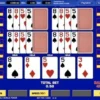
2-7 Triple Draw (also called Deuce-to-Seven Triple Draw) is a lowball draw poker game. Each player gets five private cards and can exchange some or all of them up to three times. The lowest hand wins.
Two rules set “deuce-to-seven” apart from other low games:
• Aces are high. An ace is the worst card for a low hand.
• Straights and flushes count against you. 7-6-5-4-3 is a straight, not a good low.
That’s why the best possible hand is 7-5-4-3-2, not all the same suit. Players call it “number one” or “the nuts”.
There are no community cards and no face-up cards. You only learn about your opponents from how many cards they draw and how they bet. That makes Triple Draw a game of reading draws, counting cards you’ve seen, and sometimes bluffing by standing pat (called “snowing”).
Who is it for? Players who enjoy maths and reads more than big all-in moments. Because it’s usually played fixed-limit, one mistake rarely costs your whole stack.
2-7 Triple Draw at a Glance
| Detail | 2-7 Triple Draw |
| Game family | Draw poker (lowball) |
| Cards per player | 5, all private |
| Draws | 3 |
| Betting rounds | 4 |
| Goal | Lowest five-card hand |
| Best hand | 7-5-4-3-2 (not all one suit) |
| Aces | High (bad) |
| Straights and flushes | Count against you |
| Usual betting structure | Fixed limit |
| Forced bets | Small blind and big blind |
| Typical table size | Up to 6 players |
How to Play 2-7 Triple Draw
| Round | What happens | Bet size |
| Blinds | Small blind and big blind are posted | — |
| Deal | Each player receives 5 cards face down | — |
| First betting round | Starts left of the big blind | Small bet |
| First draw | Each player discards 0–5 cards and receives replacements | — |
| Second betting round | Starts left of the button | Small bet |
| Second draw | Discard and replace again | — |
| Third betting round | Starts left of the button | Big bet |
| Third (final) draw | Discard and replace a final time | — |
| Fourth betting round | Starts left of the button | Big bet |
| Showdown | Lowest five-card hand wins | — |
Step by step
1. Blinds. The two players to the left of the button post the small blind and big blind.
2. Deal. Everyone gets five cards face down.
3. First betting round. Action starts with the player to the left of the big blind. Players can fold, call or raise. Bets use the small bet.
4. First draw. Starting left of the button, each player chooses how many cards to discard (none to five) and receives that many new cards. Keeping all five is called standing pat.
5. Second betting round. Still at the small bet.
6. Second draw. Discard and draw again.
7. Third betting round. Bets double to the big bet.
8. Third draw. The final exchange.
9. Final betting round. At the big bet.
10. Showdown. The lowest hand wins.
What everyone can see: how many cards each player draws. A player drawing three cards is usually drawing to a weaker or less-developed hand. A player standing pat is either strong or bluffing.
If the deck runs out
With six players drawing three times, the deck can run out. In that case, the dealer usually shuffles the discards (except the cards being discarded on the current draw) to form a new stock. Exact procedures vary by room.
2-7 Triple Draw Rules
• Each player has five cards, and all five play. There’s no “best five from seven”.
• Aces are always high. A-2-3-4-5 isn’t a straight in 2-7. It’s an ace-high hand and is weak.
• Straights count. 6-5-4-3-2 is a straight and loses to almost any unpaired, non-straight hand.
• Flushes count. Five cards of the same suit is a flush, which is a bad hand.
• Pairs are bad. Any pair loses to every unpaired, non-straight, non-flush hand.
• Betting is usually fixed limit: small bet for the first two rounds, big bet for the last two. A cap of one bet plus three or four raises per round is common.
• Tied hands split the pot. Suits never break ties.
2-7 Triple Draw Hand Rankings
Compare hands from the highest card down. The lower top card wins. If the top cards match, compare the next card, and so on.
| Rank | Hand | Name |
| 1 | 7-5-4-3-2 | Number one (the nuts) |
| 2 | 7-6-4-3-2 | Number two |
| 3 | 7-6-5-3-2 | Number three |
| 4 | 7-6-5-4-2 | Number four (worst 7-low) |
| 5 | 8-5-4-3-2 | Best 8-low |
| 6 | 8-6-4-3-2 | 8-6 low |
| 7 | 8-6-5-3-2, 8-6-5-4-2, 8-6-5-4-3 | Rougher 8-6 lows |
| 8 | 8-7-x-x-x | 8-7 lows (rough 8s) |
| 9 | 9-high hands | e.g. 9-7-5-4-2 |
| 10 | 10-high hands | e.g. 10-8-6-4-3 |
| — | Pairs, straights, flushes | Lose to any unpaired, non-straight, non-flush hand |
Important facts:
• There are only four 7-lows in deuce-to-seven, and every one contains both a 2 and a 7.
• 7-6-5-4-3 isn’t a 7-low. It’s a straight.
• 6-5-4-3-2 isn’t a “6-low”. It’s a straight, and it loses.
• A-2-3-4-5 is ace-high. It loses to any king-high or lower unpaired hand.
2-7 vs A-5 lowball (the Razz system)
| Deuce-to-seven (2-7) | Ace-to-five (A-5) | |
| Used in | 2-7 Triple Draw, 2-7 Single Draw | Razz, A-5 Triple Draw |
| Ace | High (bad) | Low (good) |
| Straights and flushes | Count against you | Ignored |
| Best hand | 7-5-4-3-2 (not suited) | 5-4-3-2-A |
If you also play Razz, this is the key switch: an ace that’s perfect in Razz is terrible in 2-7.
Real examples from the 2026 WSOP
• $1,500 Limit 2-7 Triple Draw (Event #58): Michelle Chin won with 8-7-5-4-2, an 8-7 low.
• $10,000 No-Limit 2-7 Single Draw Championship (Event #17): the winning hand was 7-6-5-3-2, number three.
• $10,000 Limit 2-7 Triple Draw Championship (Event #67): On the final hand, both players ended with pairs, and Koji Fujimoto’s pair was better. His winning hand was 7-6-5-3-3, a pair of threes.
The last example shows how unpredictable Triple Draw can be. Even at the top level, a pair can win a bracelet when neither player makes an unpaired hand.
Starting Hands
The deuce is the most important card in 2-7. Every 7-low needs a 2, so hands without one are much harder to improve.
| Category | Example (cards kept) | Rating | Notes |
| Premium made hand | 7-5-4-3-2 | The nuts | Stand pat and bet |
| Strong made hand | 7-6-4-3-2, 8-5-4-3-2 | Excellent | Usually stand pat |
| Premium one-card draw | 2-3-4-7, 2-3-5-7, 2-4-5-7 | Excellent | Many outs to a 7 or 8 |
| Good one-card draw | 2-3-4-8, 2-3-5-8, 2-3-6-7 | Good | Strong in position |
| Strong two-card draw | 2-3-7, 2-4-7, 2-3-5 | Good | Very playable, especially in position |
| Playable two-card draw | 2-5-8, 3-4-7 | Playable | Better in position or when stealing |
| Weak | Hands without a 2, three-card draws, hands with an ace or face card | Fold | Hard to make a winning hand |
Why 2-3-4-7 is better than 2-3-4-6
• 2-3-4-7 can catch a 5 (7-5-4-3-2, the nuts), a 6 (7-6-4-3-2) or an 8 (8-7-4-3-2) without making a straight.
• 2-3-4-6 catches a 5 and makes 6-5-4-3-2, a straight, which is a bad hand. Its good cards are the 7 and the 8.
Cards that complete a straight are the hidden danger in deuce-to-seven. Always check which of your “outs” would make a straight.
Drawing Odds
This table shows approximate chances of hitting a one-card draw. It assumes 47 unseen cards and that you draw one card each time.
| Outs | Example | Hit on next draw | Hit within 2 draws | Hit within 3 draws |
| 4 | Drawing to a specific rank, e.g. needing a 7 | ~8.5% | ~16.5% | ~23.9% |
| 8 | 2-3-4-7 needing a 5 or 6 (7-low) | ~17.0% | ~31.5% | ~43.6% |
| 12 | 2-3-4-7 needing a 5, 6 or 8 (8-low or better) | ~25.5% | ~45.0% | ~59.6% |
These figures are calculated from a standard 52-card deck. Real odds are a little lower when cards you need have already been discarded by other players.
What this means: A strong one-card draw with three draws to come hits more than half the time. With one draw left, the same draw hits only about a quarter of the time. Your hand’s value falls quickly as the draws run out.
2-7 Triple Draw Strategy
1. Play hands with a deuce. It’s the key to every 7-low.
2. Prefer one-card draws and smooth two-card draws. Three-card draws are rarely worth playing.
3. Use position. Acting last lets you see how many cards your opponents draw before you decide.
4. Count the draws. Drawing fewer cards often signals a stronger hand, but it is not proof that you are ahead.
5. Watch for straights and flushes. Know which of your outs would ruin your hand.
6. Break a made hand only when it’s weak. A rough 9 or 10 can sometimes be broken to draw to something better if your opponent is drawing too. A made 8 or better is usually kept.
7. Snow occasionally. Standing pat on a weak hand can make a drawing opponent fold. Use it sparingly and in the right spots.
8. Value bet made hands. If you’re pat and your opponent is drawing, bet. They’ll often call with draws.
Strategy by Round
| Round | Key question | Advice |
| First betting round | Is my hand worth playing? | Play strong draws with a deuce. Raise in late position to steal blinds. |
| First draw | How many cards should I take? | Keep your best low cards. Usually draw 1 or 2. Avoid three-card draws. |
| Second betting round | Who’s likely ahead? | Fewer cards drawn often signals a stronger hand, but not always. Bet when the draws and the action suggest you’re ahead. |
| Second draw | Should I keep drawing? | If you made a smooth 8 or better, consider standing pat. |
| Third betting round | Bets are bigger now | Fold weak draws against made hands. Bet made hands. |
| Third draw | Last chance | Draw only if the pot is big enough to justify it. |
| Final betting round | Value bet, call or fold? | Bet strong made hands. Call when the pot odds justify it. Bluff selectively. |
Common Mistakes
1. Treating the ace as low. In 2-7, the ace is high.
2. Forgetting straights and flushes. 6-5-4-3-2 is a losing hand.
3. Playing hands without a deuce too often. Without a 2 you can’t make a 7-low.
4. Drawing three cards. Three-card draws rarely become winning hands.
5. Ignoring position. Out of position, you act without seeing your opponent’s draw first.
6. Never breaking a weak made hand. A rough 10 against a one-card draw is often worth breaking.
7. Calling all the way with weak draws. The last two bets are big, so marginal calls get expensive.
Tournament Strategy
| Stage | Advice |
| Early | Play tight. Stacks are deep relative to the limits. |
| Middle | Steal blinds more often from late position with good draws. |
| Bubble | Pressure cautious medium stacks. Avoid marginal confrontations with other big stacks. |
| Final table | Pay jumps matter. Position and draw counting become even more important. |
| Short stack | Commit with good one-card draws or made hands before the blinds take your stack. |
At the 2026 WSOP, the $10,000 Championship started players with 60,000 chips, with levels of 40, 60 and 90 minutes over three days. The $1,500 event started players with 25,000 chips and 40-minute Day 1 levels.
2-7 Triple Draw Tournaments
2026 WSOP results
| Event | Buy-in | Entries | Prize pool | Winner | First prize |
| #67: Limit 2-7 Triple Draw Championship | $10,000 | 176 | $1,636,800 | Koji Fujimoto (Japan) | $392,478 |
| #58: Limit 2-7 Lowball Triple Draw | $1,500 | 657 | $872,167 | Michelle Chin (USA) | $161,313 |
| #17: No-Limit 2-7 Single Draw Championship (related game) | $10,000 | 198 | $1,841,400 | Naoya Kihara (Japan) | $428,923 |
$10,000 Limit 2-7 Triple Draw Championship history
| Year | Winner | Entries | Prize pool | First prize |
| 2019 | Luke Schwartz | 100 | $940,000 | $273,336 |
| 2023 | Benny Glaser | 130 | $1,209,000 | $311,428 |
| 2024 | Phil Ivey | 149 | $1,385,700 | $347,440 |
| 2025 | Alexander Wilkinson | 141 | $1,311,300 | $333,054 |
| 2026 | Koji Fujimoto | 176 | $1,636,800 | $392,478 |
The 2026 field of 176 was the largest of these five editions, up about 25% on 2025.
2026 highlights
• Koji Fujimoto beat Poker Hall of Famer Nick Schulman heads-up to win his first bracelet, stopping Schulman’s bid for a ninth. Fujimoto became the 11th Japanese player to win a WSOP bracelet, and Japan’s third bracelet of the summer, after Naoya Kihara’s two.
• Final table: Tommy Hang (3rd, $172,064), Andrew Kelsall (4th, $119,011), Justin Smith (5th, $84,845), Todd Brunson (6th, $62,404), Naoya Kihara (7th, $47,401), lowball legend Billy Baxter (8th, $37,224) and Robert Wells (9th, $37,224). Baxter won his first WSOP bracelet in 1975, and all seven of his bracelets came in lowball.
• Michelle Chin won the $1,500 event from 657 entries. She was the first woman to win an open mixed-game bracelet since Carol Fuchs in 2015.
Online 2-7 Triple Draw
PokerStars’ WCOOP 2026 included a $1,050 Fixed-Limit 2-7 Triple Draw World Championship on September 15, alongside $22 and $215 versions of the same event. Large online series often include 2-7 Triple Draw, both on its own and in mixed-game rotations.
2-7 Triple Draw vs Other Lowball Games
| Game | Cards | Draws / streets | Low system | Usual betting |
| 2-7 Triple Draw | 5 private | 3 draws | Deuce-to-seven | Fixed limit |
| 2-7 Single Draw | 5 private | 1 draw | Deuce-to-seven | No limit |
| A-5 Triple Draw | 5 private | 3 draws | Ace-to-five | Fixed limit |
| Badugi | 4 private | 3 draws | Badugi (four different suits and ranks) | Fixed limit |
| Razz | 7 (stud) | 5 betting streets | Ace-to-five | Fixed limit |
2-7 Triple Draw is part of the 8-Game mix, and also appears in Dealer’s Choice and other mixed-game formats.
Glossary
| Term | Meaning |
| Number one | 7-5-4-3-2, the best hand |
| Pat | Keeping all five cards (no draw) |
| Snowing | Standing pat with a weak hand as a bluff |
| Breaking | Discarding from a made hand to draw for a better one |
| Smooth | A low with small cards under the top card |
| Rough | A low with big cards under the top card |
| One-card draw | Keeping four cards and drawing one |
| Brick | A card that doesn’t help |
| Outs | Cards that make your hand |
| Deuce | A 2, the most important card in 2-7 |
Where to Play 2-7 Triple Draw Online
2-7 Triple Draw is mostly found at large international poker rooms, often as part of mixed-game tables and in series such as WCOOP. Traffic is lower than for Hold’em, so games may run at set times.
Online poker rules vary by country and can change. Check whether a site is licensed where you live and only play on licensed sites. Readers in India should check the current rules for their state.
FAQs
What is 2-7 Triple Draw?
2-7 Triple Draw is a lowball draw poker game where each player gets five cards and can exchange cards three times. The lowest hand wins, aces are high, and straights and flushes count against you.
What is the best hand in 2-7 Triple Draw?
The best hand is 7-5-4-3-2, not all of one suit. It’s often called “number one”.
Is A-2-3-4-5 good in 2-7?
No. In deuce-to-seven, the ace is high, so A-2-3-4-5 is an ace-high hand and is weak.
Do straights and flushes count in 2-7 Triple Draw?
Yes. Straights and flushes count against you, so 6-5-4-3-2 is a straight and a bad hand.
How many draws are there in 2-7 Triple Draw?
There are three draws and four betting rounds.
What is the difference between 2-7 and Razz?
2-7 Triple Draw uses deuce-to-seven rankings, where aces are high and straights and flushes count. Razz uses ace-to-five rankings, where aces are low and straights and flushes are ignored. Razz is also a stud game with face-up cards, while Triple Draw is a draw game with all cards hidden.
What are the best starting hands in 2-7 Triple Draw?
The best starting hands contain a deuce and low cards that can’t easily make a straight, such as one-card draws like 2-3-4-7 or 2-3-5-7, and made hands like 7-5-4-3-2.