
Last Updated on July 24, 2026 by Bala Kumar
1. Quick Answer
To play poker sustainably, you need a dedicated bankroll of 20 to 40 buy-ins for cash games or 50 to 100 buy-ins for tournaments. This money must be completely separate from your living expenses so you can survive the natural mathematical swings, known as variance, that every poker format produces, even for skilled winning players.
This single guideline is the foundation of proper bankroll management for poker beginners, and it applies whether you’re playing $0.01/$0.02 online micro-stakes or $1/$2 live cash games at a casino.
2. Calculate Your Needed Bankroll
Your exact bankroll requirement depends entirely on two factors: the game format you play (cash games vs. tournaments) and the stakes you choose. Getting this calculation right before you sit down is one of the most important habits separating long-term winners from players who go broke despite having a real skill edge.
The basic bankroll formula:
Bankroll Needed = Buy-In Amount × Recommended Number of Buy-Ins
For example, if you’re playing a $50 cash game buy-in and following the standard 30-buy-in recommendation, you’d want a dedicated bankroll of $1,500 before sitting down at that stake.
3. Cash Game Bankroll Chart by Stake Level
Cash game bankrolls are measured in “buy-ins,” where one buy-in typically equals 100 big blinds (bb) at that stake. A standard, well-tested recommendation is 20 to 40 buy-ins, with 30 buy-ins as a safe middle ground for most players.
| Stake Level | Blinds | Standard Buy-In | Total Bankroll Needed (30 Buy-Ins) |
| 2NL (Online) | $0.01 / $0.02 | $2.00 | $60.00 |
| 10NL (Online) | $0.05 / $0.10 | $10.00 | $300.00 |
| 50NL (Online) | $0.25 / $0.50 | $50.00 | $1,500.00 |
| $1/$2 (Live) | $1.00 / $2.00 | $200.00 | $6,000.00 |
| $1/$3 (Live) | $1.00 / $3.00 | $300.00 | $9,000.00 |
Key takeaway: As stakes increase — especially moving from online to live poker — the total bankroll required grows dramatically. This is exactly why a reliable poker bankroll calculator approach matters more at higher stakes, where a single bad downswing can be financially significant.
4. Tournament Bankroll Management: How Many Buy-Ins Do You Need?
Bankroll management poker tournaments rules differ significantly from cash games because tournament variance is much higher, most players don’t cash in most tournaments they enter, even when playing well.
- Standard recommendation: 50 to 100 buy-ins for regular multi-table tournaments (MTTs)
- Sit and Go / smaller field tournaments: 30 to 50 buy-ins is often sufficient given lower variance
- Large-field MTTs (500+ entries): Lean toward 100+ buy-ins, since deep runs are rarer and top-heavy payout structures increase variance
Example: If you’re playing $20 tournaments regularly, a properly managed bankroll following the 100-buy-in guideline would be $2,000 dedicated specifically to tournament play.
5. Poker Bankroll Calculator: The Formula Explained
If you don’t want to calculate this manually every time, a poker bankroll calculator applies the same core formula automatically:
- Input your buy-in amount at your chosen stake.
- Select your game format (cash game or tournament).
- Apply the recommended buy-in multiplier (20–40 for cash, 50–100 for tournaments).
- Output: your total recommended bankroll before moving up in stakes.
Using a dedicated calculator tool removes guesswork and helps enforce discipline — especially useful for beginners who might otherwise be tempted to play stakes their current bankroll can’t safely support.
6. How Much Money Do You Need to Play Poker at a Casino?
For players asking specifically how much money do you need to play poker at a casino, live poker requires a larger dedicated bankroll than online play for a few key reasons:
- Live buy-ins are typically larger in absolute dollar terms than equivalent online stakes.
- Fewer hands are played per hour live, which can extend losing streaks in real time even though the underlying variance is similar.
- Additional costs apply, including tips for dealers, potential travel, and food/drink at the casino, all of which should be budgeted separately from your poker bankroll itself.
Practical example: For a standard $1/$2 No-Limit Hold’em live cash game with a $200 buy-in, a properly managed bankroll (30 buy-ins) would be $6,000, separate from any other casino spending.
7. Aggressive vs Conservative Bankroll Management
Not every player needs to follow the same buy-in guidelines. Aggressive bankroll management strategies exist for players with a higher risk tolerance, additional income sources, or a strong, well-documented skill edge at their current stakes.
| Approach | Cash Game Buy-Ins | Tournament Buy-Ins | Best For |
| Conservative | 40+ buy-ins | 100+ buy-ins | Beginners, risk-averse players |
| Standard | 20–30 buy-ins | 50–100 buy-ins | Most recreational and semi-pro players |
| Aggressive | 15–20 buy-ins | 30–50 buy-ins | Experienced players with proven edge or backup income |
Important: Aggressive bankroll management significantly increases your risk of going broke (“bust risk”) even if you’re a genuinely winning player, since short-term variance can overwhelm a thin bankroll cushion. This approach is only recommended for experienced players who fully understand the tradeoff.
8. Bankroll Management Rules Every Beginner Should Follow
- Keep your poker bankroll completely separate from personal or household finances — never treat it as part of your regular spending money.
- Move down in stakes without hesitation if your bankroll drops below the recommended buy-in count for your current level.
- Only move up in stakes once you’ve built a full bankroll cushion at the new level, not just because you’ve run well recently.
- Track your results across sessions to understand your actual win rate and variance, not just recent hot or cold streaks.
- Set a “stop-loss” for individual sessions to avoid chasing losses on a bad day, separate from your overall bankroll rules.
9. Common Bankroll Mistakes to Avoid
- Playing stakes above your bankroll because a stake “feels beatable,” ignoring proper buy-in guidelines
- Treating bankroll as flexible by dipping into it for non-poker expenses, then trying to “win it back”
- Moving up in stakes too quickly after a single good session, rather than a consistent, extended sample
- Ignoring tournament-specific variance, applying cash game buy-in rules to MTTs where variance is much higher
- Failing to separate live and online bankrolls, mixing budgets that should realistically be tracked independently
10. Poker Hands and Variance: Why Bankroll Matters More Than You Think
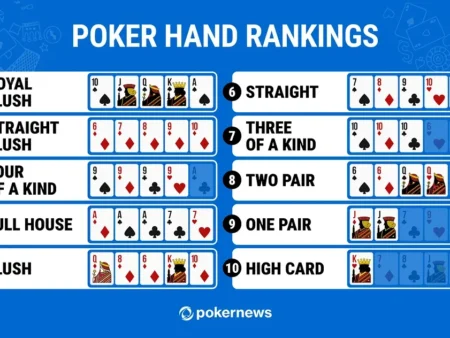
Even with perfect poker hands strategy and correct decision-making, short-term results are still heavily influenced by variance. A skilled player can make every correct decision in a session and still lose money simply because of the natural randomness of card distribution. This is exactly why proper bankroll management exists, it’s not a strategy adjustment, it’s financial protection against normal, expected losing streaks that happen to every player, regardless of skill level.
Understanding this distinction, between a losing session and a fundamentally flawed strategy, is one of the most important mental shifts for any serious poker player to make.
11. Final Takeaway
Proper bankroll management isn’t just a defensive strategy — it’s the financial foundation that allows skilled poker decisions to actually translate into long-term profit. Whether you’re a complete beginner working out bankroll management for poker beginners basics or an experienced player considering a more aggressive bankroll management approach, the underlying principle stays the same: keep your poker funds separate, follow buy-in guidelines appropriate to your game format, and never let a single bad session put your ability to keep playing at risk.
FAQs
How much bankroll do I need to play poker online?
For online cash games, 20–40 buy-ins at your chosen stake is the standard recommendation. For example, at a $10 buy-in stake, that means a bankroll of $200–$400.
How much money do I need to play poker at a casino?
Live cash games typically require a larger bankroll than online due to bigger absolute buy-ins — for a common $1/$2 game, expect to need $4,000–$8,000 for proper bankroll management, separate from other casino expenses.
What is aggressive bankroll management in poker?
Aggressive bankroll management uses a smaller buy-in cushion (as low as 15–20 buy-ins for cash games) to allow faster stake progression, but comes with significantly higher risk of going broke during normal downswings.
Do tournaments need a bigger bankroll than cash games?
Yes, tournaments require significantly more buy-ins (typically 50–100) than cash games (20–40) because tournament payout structures are top-heavy and variance is much higher.
Is there a free poker bankroll calculator I can use?
Yes, most poker strategy sites and tools sections offer free bankroll calculators that apply these buy-in formulas automatically based on your stake and game format.
Founder of PokerClubGames.com and a Poker Researcher with 10+ years of experience in SEO, WordPress development, and gaming content strategy. Specializes in researching online poker sites, poker apps, tournaments, bonuses, and poker strategies. Experienced in poker platform reviews, affiliate marketing, and creating SEO-focused poker content for global audiences.
For collaborations, media inquiries, or poker-related partnerships:
Contact: Info@hugecount.com