
Sit & Go Strategy: The Complete SNG Blueprint

On this page
Most players learn sit & gos the hard way. They play the first hour like a cash game, run out of chips during the middle stage, then bust on the bubble with a hand they “had to call.” Fortunately for anyone willing to learn, a sit & go has a structure you can plan for in advance. You know how many players are at the table, how many get paid, and when the blinds go up. A lot of good decisions follow from those three facts.
This sit and go strategy blueprint is part of our wider poker tournament strategy series. It goes through each stage of an SNG: what to do, why it works, and the maths behind it. It also covers what has changed in the 2026 online game, because rake and formats make a big difference to how much you can actually win.
What Is a Sit & Go (and Why It’s Different)?
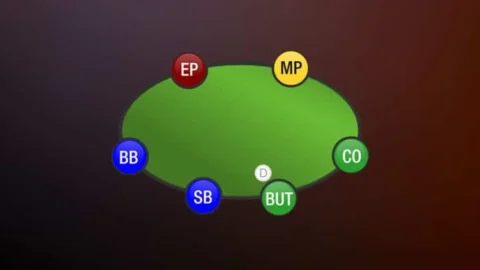
A sit & go (SNG) is a small tournament that starts as soon as enough players register. There’s no scheduled start time. A classic SNG has 9 players at one table, with the top three paid (often 50% / 30% / 20%). There are also 6-max, heads-up, 3-handed “Spin” formats and multi-table SNGs.
The key difference from cash games is this: in an SNG, chips are not money. The prize pool is fixed, and your chips only tell you roughly how likely you are to finish in each paid spot. Doubling your stack does not double your equity. Once you understand that, the rest of SNG strategy makes sense.
The 2026 SNG Landscape at a Glance
| Format | Players | Typical Start | Blind Speed | Payout | Skill Edge | Variance |
| Regular 9-max | 9 | 75–100 BB | 8–10 min | Top 3 | Highest | Low |
| Turbo 9-max | 9 | 50–75 BB | 5 min | Top 3 | High | Medium |
| Hyper-Turbo | 2–9 | 15–25 BB | 2–3 min | Varies | Push/fold heavy | High |
| 6-max / 5-max | 5–6 | 50–75 BB | 3–5 min | Top 2 | High | Medium |
| Spin & Go / Jackpot SNG | 3 | 15–25 BB (depends on multiplier) | 1–5 min (depends on multiplier) | Winner-takes-all at low multipliers; top 2–3 paid at big ones | Medium | Very high |
| Double or Nothing / Fifty50 | 6–10 | 50+ BB | Varies | Top half doubles up | Medium | Low |
Figures are typical ranges. Exact structures vary by site and change from time to time, so check the tournament lobby before you play.
What’s current in 2026:
- PokerStars still has the widest range of SNG formats: regular, turbo and hyper speeds, Spin & Go, heads-up, 6-max and 9-max.
- Spin & Go at PokerStars no longer uses one structure for every game. The starting stack and level length depend on the prize multiplier that’s revealed when the game starts:
| Multiplier | Starting Stack (10/20 blinds) | Level Length |
| 2x | 300 chips (15 BB) | 1 minute |
| 3x | 300 chips (15 BB) | 2 minutes |
| 4x | 400 chips (20 BB) | 2 minutes |
| 5x | 400 chips (20 BB) | 3 minutes |
| 10x–25x | 500 chips (25 BB) | 3 minutes |
| Higher multipliers | 500 chips (25 BB) | Longer levels (up to about 5 minutes) |
The low multipliers come up most often and are also the fastest, so most of your Spins start with 15–20 big blinds or fewer. That’s why Spin strategy is mostly preflop decisions.
- Every major site now has its own jackpot SNG: Spin & Go (PokerStars), Spin & Gold (GGPoker), Expresso (Winamax), Blast (888poker/WSOP) and Twister (iPoker). Each one has its own structure and payout rules.
The Hidden Opponent: Rake
Before strategy, you need to know about rake. SNGs at the micro stakes carry very high fees, and that changes which formats are worth playing.
When PokerStars last raised SNG rake (in 2024), its 9-max regular micro-stakes SNGs went up to about 16–17%. Fifty50 and higher-stakes formats stayed noticeably cheaper. Rake tables can change, so always check the current fee shown in the lobby.
On the other side, PokerStars Rewards can return 10.5%–28% of rake and tournament fees, depending on your rewards level. PokerStars presents this as a rewards program rather than traditional rakeback, but it has a similar effect on your bottom line.
What this means in practice: At 17% rake, a $3 + $0.50 game charges more than half a buy-in in fees across every three games you play. A player who would win 10% ROI in a rake-free game can easily break even after fees. Three things follow from this:
- Check the fee before you register. The same structure at a different buy-in can carry a very different rake.
- Rewards and rakeback programs are part of your win rate, especially for hypers and Spins, where rake and variance take most of the profit.
- Moving up a level often lowers the rake percentage. Make that move once your results and bankroll justify it.
Stage 1: The Early Game (Blinds 10/20 to ~50/100)
Goal: build a stack without risking your tournament.
Early in an SNG, the blinds are tiny compared with stacks. Stealing blinds isn’t worth much, but the field is full of players making big mistakes. So the plan is tight, value-heavy poker:
- Open-raise strong hands, and be selective with marginal ones. Hands like K-J offsuit or A-9 offsuit aren’t automatic folds. They’re fine to open from the cutoff or button, especially against tight blinds. From early position at a full 9-max table, with deep stacks and loose callers behind, they’re often dominated and are usually better folded. Position, stack depth and opponents decide it, not the hand alone.
- Set-mine with small pairs when stacks are deep. It’s cheap to see a flop, and the payoff when you hit is big.
- Don’t build big pots with one pair. Top pair with a weak kicker is a hand to keep pots small, not to get all your chips in.
- Avoid fancy bluffs against players who don’t fold. In micro-stakes SNGs, the player calling every street probably isn’t going to fold the river.
Practical insight: Your early-game edge comes from avoiding big mistakes, not from winning big pots. Lots of players finish the first hour with 2,000 chips and still win the tournament. Very few win after getting stacked in level 3 with Q-J on a Q-high board.
Stage 2: The Middle Game (5–7 Players Left, 15–25 BB Stacks)
Goal: take blinds and antes before the blinds take your stack.
This is where the game changes. Blinds have gone up, stacks are shallower, and the blinds plus antes are now worth fighting for. Keep two numbers in mind:
- Your stack in big blinds (BB). At 20 BB you can still open-raise and fold. Between about 10 and 15 BB, open-shoving takes over more and more, especially from late position. It isn’t a hard cut-off: a small raise can still work from early position or against passive players, while shoving does better against opponents who re-shove a lot. Position and table dynamics decide which you use.
- Your M-ratio (stack ÷ cost of one orbit). Below 10, you’re in trouble. Below 5, you need to act straight away.
What to do:
- Steal more from late position, especially against tight players in the blinds.
- Re-shove over loose openers when you have 12–20 BB and a hand that plays well all-in (A-x, pocket pairs, broadway hands).
- Don’t call off your stack with hands you would happily shove yourself. When you shove, you have fold equity (opponents can fold). When you call, you have none.
Stage 3: The Bubble and SNG ICM Strategy (4 Left, 3 Paid)
This stage separates winning SNG players from losing ones.
ICM in plain language
The Independent Chip Model (ICM) turns your chip stack into a share of the prize money. Because the prize pool is fixed and paid in steps, chips you might lose are worth more to you than chips you might win.
Here’s a simplified, hypothetical example worked out with the standard ICM (Malmuth-Harville) method. In a 9-max SNG with 1,500 starting chips (13,500 chips in play), paying 50 / 30 / 20 out of a 100-unit prize pool, we’re on the bubble:
| Player | Chips | % of Chips | ICM Equity (units) |
| A (big stack) | 5,500 | 40.7% | 33.8 |
| B (you) | 4,000 | 29.6% | 29.2 |
| C | 2,500 | 18.5% | 22.3 |
| D (short) | 1,500 | 11.1% | 14.6 |
Two things stand out. The big stack holds 41% of the chips but only about 34% of the money. The short stack holds 11% of the chips but almost 15% of the money. Chips lose value as you collect more of them.
A bubble decision, worked out
Player A shoves all in. You’re Player B with 4,000 chips and have to decide whether to call.
- If you fold, your equity stays at 29.2 units.
- If you call and win, you go to 8,000 chips and about 40.2 units.
- If you call and lose, you bust on the bubble with 0.
To make the call worthwhile, you need 29.2 ÷ 40.2 ≈ 73% equity. In a cash game the same spot would need roughly 50%.
Important: That 73% applies to this specific spot (these stacks, this payout and this player shoving). It isn’t a universal threshold. Change the stacks or the payouts and the number changes.
Whether a hand clears the bar also depends on what Player A shoves with:
- If A shoves almost any two cards, A-K has about 65–67% equity (offsuit to suited) against that range. That’s still short of 73%, so folding A-K is correct here.
- If A only shoves strong hands, A-K’s equity drops further and folding is clearly right.
- Big pairs like Q-Q+ against a wide range get much closer to the threshold or past it.
So the lesson isn’t “always fold A-K on the bubble”. It’s that calling ranges on the bubble are much tighter than in chip-EV situations, and you should work out your opponent’s likely shoving range before deciding. An ICM calculator does this for you in seconds.
What this means at the table
- Big stack: Shove often into medium stacks. They can’t call you without a premium hand.
- Medium stack: Your stack is worth protecting. Avoid confrontations with the big stack, and pick on the short stack instead.
- Short stack: You aren’t as desperate as it feels. Push when you’re first into the pot, because pushing gives you fold equity and calling doesn’t.
Stage 4: In the Money and Heads-Up
Once the bubble bursts, the ICM pressure drops a lot. The pay jumps from 3rd to 2nd to 1st are smaller than the jump from nothing to 3rd, so you can open up and play to win.
Three-handed:
- Play much more aggressively. With only three players you’re in the blinds two-thirds of the time.
- Steal often from the button, and re-shove lighter against players who keep stealing.
Heads-up:
- Ranges get very wide. With about 10 BB, chip-EV push/fold charts have the small blind shoving a large share of hands, often more than half the deck. That share grows as stacks get shorter and shrinks as they get deeper. Against an opponent who calls too much, tighten up and shove more value hands. Against one who folds too much, shove wider.
- Keep pressure on. Passive heads-up play almost always loses to someone who attacks every orbit.
- Don’t fold the small blind too often. Each fold gives away half a big blind for nothing.
Practical insight: Most mid-stakes regulars know the bubble well but give away money heads-up. Learn the 10 BB push/fold ranges for heads-up and you’ll win more of the 1st-versus-2nd decisions over thousands of games.
Poker Push/Fold Strategy Basics (Short Stacks)
When your stack gets short (roughly 10–12 BB and below, depending on position and opponents), raising and then folding to a shove starts throwing chips away. The table below gives illustrative chip-EV starting ranges to show how ranges widen as stacks shrink. They aren’t exact recommendations. Real ranges depend on the number of players left, antes, position, stack sizes behind you and ICM. Use a push/fold trainer or ICM calculator for precise ranges.
| Stack | Unopened, Late Position | Unopened, Early Position |
| 10–12 BB | Any pair, A-x suited, A-8o+, K-T+, Q-J, suited connectors 87s+ | Pairs 55+, A-T+, K-Q |
| 6–9 BB | Any pair, any ace, K-x suited, K-9o+, Q-T+, J-T | Pairs 33+, A-8+, K-J+ |
| Under 5 BB | Very wide: any ace, any king, most suited hands, connected cards | Most pairs, any ace, broadway hands |
These are simplified chip-EV examples for learning purposes. On the bubble, tighten up when you’re calling and loosen up when you’re shoving. ICM punishes calling far more than shoving.
Format-Specific Adjustments
Hyper-turbos and Spins: You’ll be in push/fold mode within a few hands. Learn the ranges, use an ICM or push/fold trainer, and accept that variance is huge. In the common low-multiplier Spins, which are winner-takes-all, ICM mostly doesn’t apply, so play for chips and treat every pot as a fight for first place. Larger multipliers can pay second and third place too, and then ICM matters again. Check the payout shown when the game starts and adjust before your first hand.
6-max / 5-max: Only the top two get paid, so the bubble starts with three players left. Raise wider from the start, because the blinds come round faster.
Double or Nothing / Fifty50: This is the opposite of a Spin. Survival is everything. With five players getting paid, once you have a safe stack you can fold almost every hand and let the short stacks bust.
Bankroll Guidelines for SNG Players
These are conservative guidelines, not fixed rules. How many buy-ins you need depends on your ROI, your risk tolerance, and whether poker is your income or a hobby. A player with a high, proven ROI can manage with fewer buy-ins. A break-even player, or someone who can’t top up their bankroll, should keep more.
| Format | uggested Bankroll (Conservative) |
| Regular / Turbo 9-max | 75–100 buy-ins |
| 6-max / Heads-up | 100 buy-ins |
| Hyper-Turbo | 150+ buy-ins |
| Spin & Go / Jackpot | 200–300+ buy-ins |
Hyper-turbos and jackpot formats need more buy-ins because long downswings are normal in them, even for winning players. If those numbers seem high, play slower formats until your bankroll grows. Our poker bankroll calculator can estimate your risk of ruin from your own ROI.
Sit and Go Poker Tips: A 5-Step Improvement Plan
- Pick one format and stay with it for at least 500 games. Mixing formats too early stops you building the right habits.
- Review your bubble hands after every session. Run them through an ICM calculator. These hands affect your ROI more than any others.
- Learn heads-up push/fold at 10 BB. It’s a small amount of study with a big payoff. Our push/fold strategy guide covers the ranges.
- Track ROI after rake and rewards. Results before rake can make a losing player look like a winner. Use the poker odds calculator to check your all-in equity in hands you’re unsure about.
- Move up only when your bankroll allows it, not after one good week.
FAQs
What is the best sit and go poker strategy for beginners?
Play tight in the early levels, start stealing blinds in the middle stage, and learn basic ICM for the bubble. Most beginner losses come from calling too much on the bubble and playing too loosely early on.
What is ICM in sit & go poker?
ICM (Independent Chip Model) converts chip stacks into a share of the prize pool. Because payouts are fixed, chips you might lose are worth more than chips you might win. That makes calling all-in on the bubble much riskier than it looks.
How much equity do I need to call an all-in on the SNG bubble?
It depends on the stacks, the payouts and your opponent’s shoving range, but it’s often far more than 50%. In our hypothetical example, a medium stack calling the chip leader’s shove with 4 players left and 3 paid needed about 73% equity. That figure applies to that spot only.
When should I start playing push/fold in an SNG?
There’s no fixed number, but open-shoving becomes the main strategy somewhere around 10–15 big blinds. It starts sooner from late position and against opponents who re-shove a lot, and later from early position or against passive players.
Are sit & gos still profitable in 2026?
Yes, but rake matters a lot. Micro-stakes 9-max SNGs can carry fees of around 16–17% at some sites, so winning players rely on solid strategy, good game selection and rewards programs to stay profitable.
Disclosure: PokerClubGames may earn a commission when you use links to poker operators. This never changes the price you pay. 18+ (21+ where required). Gambling involves risk. How we make money