
Pai Gow Poker Strategy: How to Set Your Hands Like the House
On this page
Last Updated on September 25, 2026 by Bala Kumar
You could be dealt the exact same seven cards as the person next to you, and still lose while they win. That’s not bad luck. It just means they know how to split those seven cards into two winning hands instead of building one strong one. That skill, hand setting, is the whole game. Master it, and you go from hoping for good cards to knowing exactly what to do with whatever you’re dealt.
What Is Pai Gow Poker?
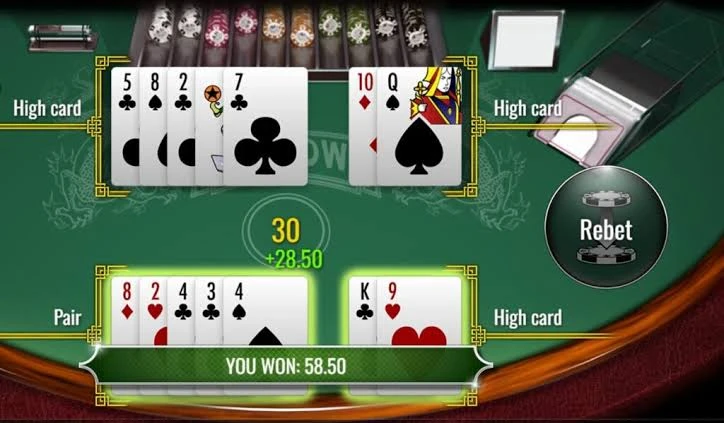
Pai Gow Poker borrows its name from the Chinese domino game Pai Gow but uses cards and standard poker rankings. Each player receives seven cards and divides them into:
- A five-card “high” hand
- A two-card “low” hand
Both hands need to beat the banker’s corresponding hands to win outright. Win one and lose the other, and it’s a push, a tie. Your bet just rolls into the next round; nothing changes hands. (Push mechanics can shift slightly by casino, but the core idea holds everywhere.) This is why Pai Gow Poker feels calmer and slower than most table games.
How it works: Everyone gets seven cards. You split yours into a five-card hand and a two-card hand, and the five-card hand must always outrank the two-card hand, get it backwards and you’ve “fouled,” an automatic loss. Beat both of the banker’s hands and you win (minus a 5% commission at most tables). Split the results and it’s a push. Lose both and you lose the bet. Most tables also let players rotate into the banker seat, which shifts the math in your favor, more on that below.
Pai Gow Poker vs. Traditional Poker (and vs. Pai Gow Tiles)
Coming from Texas Hold’em? Forget most of what you know. In regular poker you build one hand to beat everyone else’s one hand. Here, you’re carving two hands out of the same seven cards, and both need to beat a single opponent, the banker. No bluffing, no betting rounds, no reading opponents. It’s pure puzzle-solving.
Worth clearing up too: Pai Gow Tiles is the original Chinese game, played with 32 dominoes and scored by pip counts — almost nothing in common with poker. Pai Gow Poker is the 1980s American version that borrowed the “two hands from one set” idea but uses a card deck plus a joker, scored with familiar poker hands.
Hand Rankings and Rules That Can Change by Casino
Your five-card hand follows standard poker rankings: Royal Flush → Straight Flush → Four of a Kind → Full House → Flush → Straight → Three of a Kind → Two Pair → One Pair → High Card. The joker is semi-wild — it completes a straight or flush, and otherwise plays as an Ace. And A-5-4-3-2 ranks as the second-highest straight (just below A-K-Q-J-10) — this one catches almost every beginner off guard. Your two-card hand can only ever be a pair or a high card.
A few details shift by casino, so check before you sit down: commission structure (5% is standard, but “no-commission” tables exist with adjusted payouts on certain hands), joker rules (nearly universal, though some online variants restrict it), the A-5432 rule (not guaranteed internationally), banking rules (some tables let any player rotate in, others don’t), and bet limits (which can determine whether banking is realistic for you). Treat any strategy chart, including the ones below, as a strong starting point — not gospel.
What Is the House Way — And Why Hand Setting Matters
The house way is the dealer’s fixed rulebook for setting the banker’s hand, built for consistency rather than maximum win rate. As a player, you’re not required to follow it — as long as your five-card hand beats your two-card hand, you can set it however you like. Knowing the house way still matters: it tells you what you’re up against, and gives you a solid fallback when you’re unsure.
Here’s the mindset shift that actually matters, though: you’re not being paid for the single strongest hand you can build. You’re paid for two hands that can each hold their own, since you only collect if both win. Stack every good card into your five-card hand and your low hand is often left with scraps — a near-automatic loss there, no matter how dominant your high hand looks. That’s why giving up a little five-card strength — splitting a full house, or breaking two pair when one pair clearly outclasses the other — is often the smarter move. You’re trading one hand that can only push for two hands with real winning chances.
This is also where house way and truly optimal strategy diverge. House way agrees with optimal play on the obvious hands (a made straight, a low single pair). But on close calls — especially two pair and four-of-a-kind in the 7-through-10 range — optimal strategy pulls away from house way more than most players expect. That gap is one of the few genuine, repeatable edges a knowledgeable player has over someone who just says “house way” every hand.
How to Set Your Hand
One pair: keep it in your five-card hand; use your two best remaining cards low. Don’t split it. Two pair: this is where most decisions happen — with two low/medium pairs and no strong kickers, keep them together; but with one strong pair and one weak pair, splitting is often better (a real pair low beats a high-card-only low hand far more often than you’d think). A rough guideline: split when your higher pair is Sixes or better and the resulting low hand is Sevens or stronger. Trips: keep together almost always. Full house: more often than not, split it — trips high, pair low — though this depends on the exact ranks and house way. Straight/flush: keep intact unless a full house is hiding inside. Four of a kind: low quads (2-6) stay together; middle quads (7-10) are the classic close call; high quads (J-A) usually split into two pair, since you have more than enough strength for both hands.
Quick Reference Chart
| Situation | General Approach |
| One pair | Keep pair high |
| Two pair | Split if one pair is clearly stronger |
| Trips | Usually keep together |
| Full house | Often split, depending on ranks |
| Straight/Flush | Usually keep intact |
| Four of a kind | Depends heavily on rank |
| Joker | Check the applicable casino rules |
Quick example: Dealt A♠ A♦ A♣ A♥ K♠ 7♦ 2♣ — split the Aces into A-A-K high and A-A low. That converts one hand that could only push into a near-unbeatable low hand plus a still-strong high hand.
Push Rate, Odds, and Banking
Roughly 40-45% of hands end in a push — not a fluke, but baked into a game where you need to win two separate comparisons to collect. The good news: the house edge you’ll see quoted (typically 1.5%-2.7%) already accounts for this, which is exactly why Pai Gow Poker stretches your bankroll further per hour than faster games.
Most tables let you rotate into banking, which flips some of the math in your favor — you collect the commission edge instead of paying it. The catch: you need enough bankroll to cover every other player’s bet at that table. If you can, it’s close to a positive-EV move most tables offer; if your bankroll’s tight, skip it.
Betting and bankroll: stick to flat betting — there’s no way to influence the outcome once cards are dealt, so progression systems don’t help. A common (not mathematically required) budgeting guideline is 20-40x your typical bet for a full session. Set a loss limit and win target before you sit down, since the slow pace makes it easy to play longer than planned.
Can Strategy Actually Beat the House?
Be honest with yourself here: reducing the house edge isn’t the same as guaranteeing a profit. Good strategy — splitting full houses, high pairs, and high quads correctly — genuinely narrows the edge against you, and banking narrows it further. But Pai Gow Poker remains a negative-expectation game long-term, same as every other table game. What good strategy buys you is a smaller edge, a longer session, and gentler swings — not a guaranteed win.
Common Mistakes
The biggest one: building the strongest possible five-card hand and forgetting your two-card hand needs to be competitive too. Right behind it, leaving the low hand too weak, blindly following house way on every hand, misusing the joker, and fouling the hand by setting your two-card hand higher than your five-card hand (an automatic, avoidable loss).
FAQs
What’s the best strategy?
Use house way as a baseline, but deviate on close calls, full houses, high pairs, high quads — where the right answer depends on your exact cards.
Should you bank?
Yes, if your bankroll covers every other player’s bet, it removes the commission disadvantage.
What’s the house edge?
Roughly 1.5%-2.7%, among the lowest of any standard table game.
Can you beat the house?
Not consistently through hand-setting alone, but smart strategy plus banking narrows the edge more than in most other games.
Is it better than blackjack?
Depends what you want, Pai Gow Poker offers lower volatility and a slower pace; blackjack moves faster and, with basic strategy, usually edges out a slightly lower house edge.
Disclosure: PokerClubGames may earn a commission when you use links to poker operators. This never changes the price you pay. 18+ (21+ where required). Gambling involves risk. How we make money