
HUD Stats Glossary: VPIP, PFR, 3-Bet% and 20 More Explained
On this page
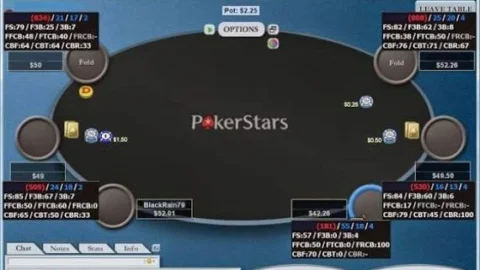
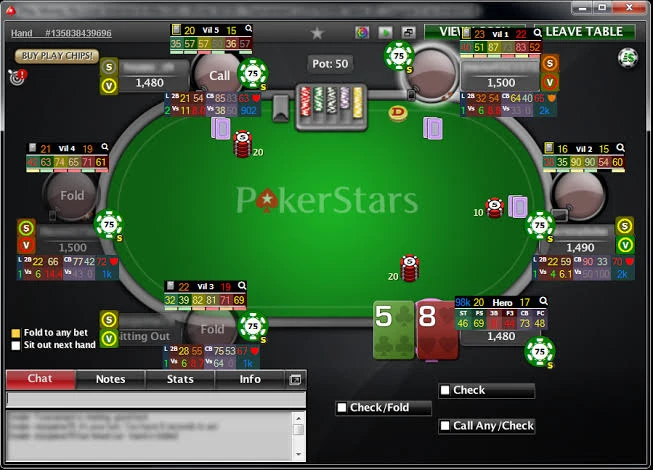
If you’ve ever opened a poker tracker and seen a row of numbers sitting above your opponent’s name, you know how confusing it can look at first. VPIP, PFR, AF, WTSD… it feels like a whole new language.
The good news? Once you understand what each stat means, a HUD becomes one of the most powerful tools in online poker. It tells you who plays too many hands, who folds too often, and who’s bluffing far more than they should.
This glossary breaks down 23 of the most useful poker HUD stats in plain English. For each one, you’ll get a simple definition, a rough guide to what’s “normal”, and how to use it at the table.
What Is a Poker HUD?
HUD stands for Heads-Up Display. It’s software that tracks every hand you play and shows statistics about your opponents directly on the poker table. Popular tools include PokerTracker 4, Hold’em Manager 3 and Hand2Note.
Over time, these numbers reveal patterns in how a player behaves. Instead of guessing whether someone is tight or loose, you can see it in black and white.
One important rule: always check whether HUDs are allowed on the site you play. Some poker rooms ban or restrict them.
Why Sample Size Matters
Before diving in, remember that a stat is only as reliable as the number of hands behind it. VPIP and PFR settle down fairly quickly, within about 50 to 100 hands. Less frequent stats, like 4-Bet% or Check-Raise%, can take thousands of hands to become meaningful.
A player showing a 40% 3-Bet after 20 hands probably just had a lucky run of cards. Treat small samples with caution.
Preflop HUD Stats
1. VPIP (Voluntarily Put Money In Pot)
The percentage of hands where a player puts money into the pot by choice, whether by calling or raising. Posting blinds doesn’t count.
This is the single best measure of how loose or tight someone is. A high VPIP means they play lots of hands; a low VPIP means they’re selective.
2. PFR (Preflop Raise)
The percentage of hands a player raises before the flop.
Compare it with VPIP. When the two numbers are close (for example, 22/19), the player is aggressive and raises most hands they play. A big gap (like 40/8) points to a passive player who calls far too often.
3. 3-Bet%
How often a player re-raises when facing an open raise before the flop.
A high 3-Bet% means the player is aggressive and likely re-raising with bluffs as well as strong hands. A very low number usually means their 3-bets are premium hands only.
4. Fold to 3-Bet
How often a player folds after opening and then facing a 3-bet.
If this number is high, you can 3-bet them more often as a bluff. If it’s low, keep your 3-bets value-heavy.
5. 4-Bet%
How often a player puts in a re-raise after facing a 3-bet.
Most players 4-bet rarely, so a higher number is a strong signal of aggression.
6. Fold to 4-Bet
How often a player folds their 3-bet when faced with a 4-bet.
A high fold rate tells you their 3-bets include plenty of bluffs.
7. ATS (Attempt to Steal)
How often a player opens from the cutoff, button or small blind when everyone before them has folded.
High numbers mean they’re trying to pick up the blinds with a wide range.
8. Fold to Steal
How often a player in the blinds folds when facing a steal attempt.
Target players with a high Fold to Steal by opening wider against them.
9. 3-Bet vs Steal
How often a player in the blinds re-raises a steal attempt.
A high number means they fight back hard, so you’ll need to tighten your steals against them.
10. Limp%
How often a player enters the pot by just calling the big blind instead of raising.
Frequent limping is usually a sign of a weaker, recreational player.
11. Cold Call%
How often a player calls a raise without having already put money in the pot.
High cold-calling often points to a passive player who likes to see flops.
Postflop HUD Stats
12. Flop C-Bet% (Continuation Bet)
How often the preflop raiser bets on the flop.
A very high C-Bet% means they bet regardless of whether the flop helped them, which makes them a good target for floats and raises.
13. Fold to Flop C-Bet
How often a player folds when facing a continuation bet on the flop.
If this is high, continuation bet more often against them.
14. Raise Flop C-Bet
How often a player raises when facing a flop continuation bet.
A high raise rate means you’ll need stronger hands to continue against them.
15. Turn C-Bet%
How often a player follows up a flop c-bet with another bet on the turn, often called a double barrel.
Players who rarely bet the turn often give up on bluffs after the flop.
16. Fold to Turn C-Bet
How often a player folds to a second bet on the turn.
A high number here suggests you can barrel them more often.
17. Donk Bet%
How often a player leads out into the preflop raiser on the flop, instead of checking to them.
Donk betting is fairly unusual and is more common among less experienced players.
18. Check-Raise%
How often a player checks and then raises when their opponent bets.
A high Check-Raise% means you need to be careful about betting thin hands against them.
19. AF (Aggression Factor)
A ratio of aggressive actions (bets and raises) to passive actions (calls) after the flop.
Calculated as (Bets + Raises) ÷ Calls. A higher number means a more aggressive player.
20. AFq (Aggression Frequency)
The percentage of postflop actions that are bets or raises, including folds in the calculation.
Many players prefer AFq to AF because it gives a fuller picture of aggression.
H2: Showdown HUD Stats
21. WTSD (Went to Showdown)
How often a player reaches showdown after seeing the flop.
A high WTSD points to a “calling station” who rarely folds. Value bet them more and bluff them less.
22. W$SD (Won Money at Showdown)
How often a player wins money when they get to showdown.
A low number combined with a high WTSD means they’re calling too much with weak hands.
23. WWSF (Won When Saw Flop)
How often a player wins the pot after seeing the flop, whether at showdown or not.
A high WWSF usually points to an aggressive player who wins lots of pots without showdown.
Typical HUD Stat Ranges (Quick Reference)
These ranges are rough guides for a solid regular in online 6-max No-Limit Hold’em cash games. Numbers will shift by game type, stakes and table size.
| Stat | Typical Range |
| VPIP | 22–28% |
| PFR | 17–23% |
| 3-Bet% | 6–10% |
| Fold to 3-Bet | 40–55% |
| ATS | 30–45% |
| Fold to Steal (BB) | 30–45% |
| Flop C-Bet% | 50–65% |
| Fold to Flop C-Bet | 40–55% |
| AF | 2–4 |
| AFq | 40–55% |
| WTSD | 24–30% |
| W$SD | 48–55% |
| WWSF | 44–50% |
How to Read Common Player Types
Tight-Aggressive (TAG) – around 22/19: Plays a solid range and raises most of the hands they enter. Usually a competent regular.
Loose-Aggressive (LAG) – around 32/26: Plays lots of hands and applies constant pressure. Dangerous but can be exploited by calling down lighter.
Loose-Passive (Calling Station) – around 45/8: Plays too many hands and mostly calls. Value bet relentlessly and avoid bluffing.
Tight-Passive (Nit) – around 12/8: Plays very few hands and rarely raises. Steal their blinds often and fold when they show strength.
Tips for Using HUD Stats Wisely
Start simple. A HUD packed with 30 stats is hard to read in real time. Begin with VPIP, PFR, 3-Bet% and a handful of others, then add more as you get comfortable.
Look at stats together, not alone. A high C-Bet% means more when you also know how often that player folds to raises.
Respect sample size. Make big adjustments only when you have enough hands to trust the numbers.
Use stats to support your reads, not replace them. Bet sizing, timing and table dynamics still matter.
Conclusion
Poker HUD stats can look intimidating at first, but each number tells a simple story about how a player thinks. Learn the basics, like VPIP, PFR and 3-Bet%, and you’ll already have an edge over opponents who play blind. Add the postflop and showdown stats over time, and you’ll start spotting leaks you can exploit in every session.
FAQs
What is the difference between VPIP and PFR?
VPIP measures how often a player puts money in the pot voluntarily, including calls. PFR only counts preflop raises. The gap between them shows how passive or aggressive a player is.
What is a good VPIP and PFR?
For 6-max cash games, a solid regular often sits around 22–28% VPIP and 17–23% PFR. Full-ring players are usually tighter.
How many hands do I need for accurate HUD stats?
VPIP and PFR become fairly reliable after 50 to 100 hands. Rarer stats can need several thousand hands.
Are poker HUDs legal?
HUD software is legal, but individual poker sites set their own rules. Always check your site’s terms before using one.
Disclosure: PokerClubGames may earn a commission when you use links to poker operators. This never changes the price you pay. 18+ (21+ where required). Gambling involves risk. How we make money